


The morning mist has lifted from the Wicklow Mountains by the time we find the modest sign for Wicklow Willow, tucked away on a country lane just up the road from Glendalough. It's the kind of place you might drive past without noticing – no grand shopfront or tourist fanfare, just a working craft studio where tradition lives and breathes in the hands of those who refuse to let it die.
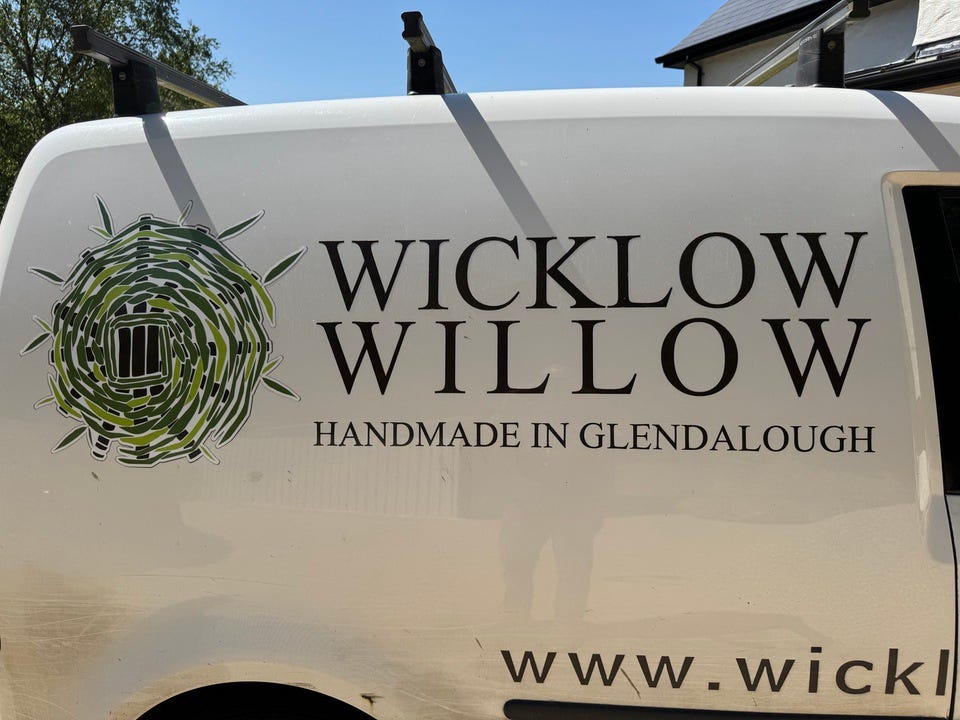
Aoife Patterson emerges from the workshop, her hands already stained with the work of the morning. Born next door to where she now works, she embodies the deep connection between place and craft that defines traditional Irish artisanship. There's something in her bearing that speaks of genuine roots – not the self-conscious heritage of tourist attractions, but the quiet confidence of someone who has found their true calling through necessity and passion combined.
"Welcome to the world of willow," she says, gesturing toward bundled rods that lean against the workshop walls like nature's own art installation. "Everything you'll see here is made the same way it's been made for centuries. Some things, it turns out, simply can't be improved upon."
The Stubborn Beauty of Handwork
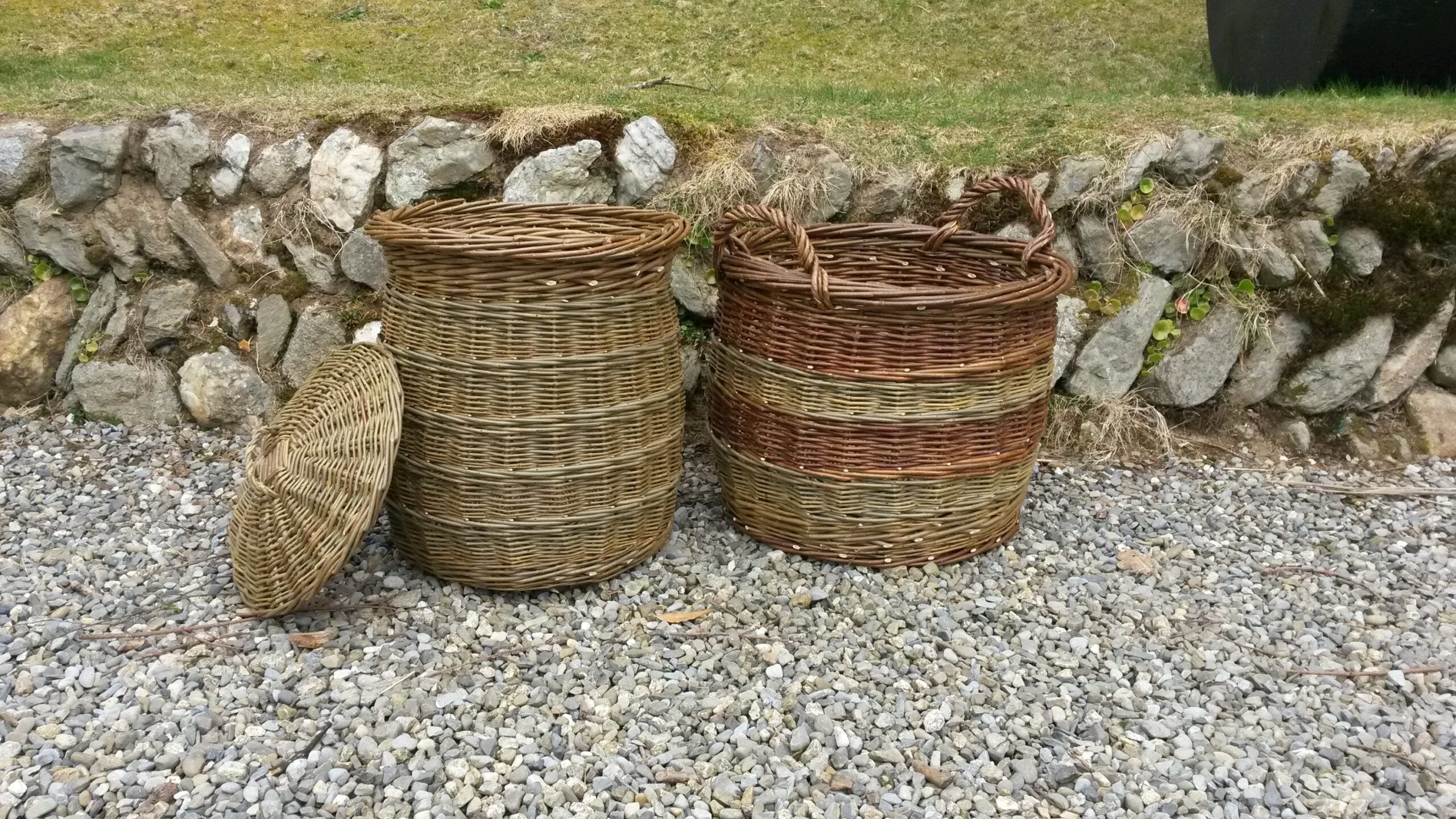
Inside the workshop, Aoife's creations line the walls and fill the corners – baskets of every conceivable size and purpose, sculptural pieces that blur a line between craft and fine art, and functional items to transform everyday necessities into objects of quiet beauty. In the middle of the floor sits her morning's work – a half-finished sciob, its base completed but the sides still rising, like sentries waiting to be woven into place.
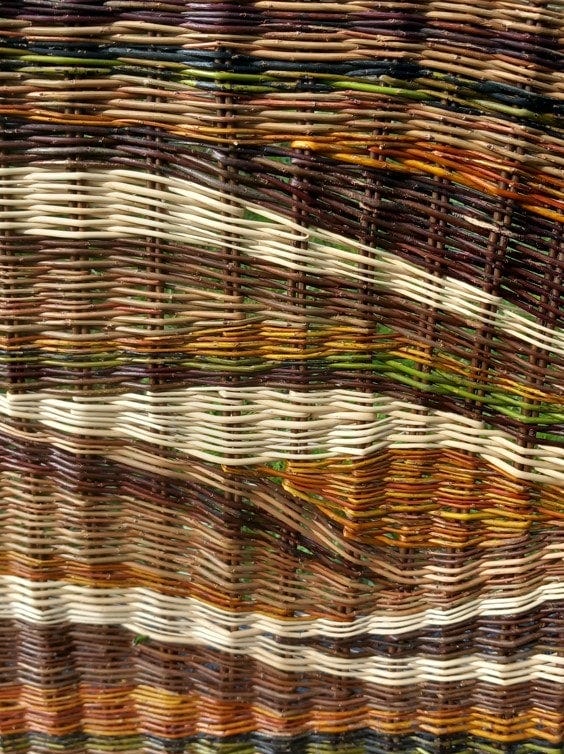
"People often ask why willow weaving hasn't been mechanised," she says, gesturing toward the carefully sorted bundles of rods leaning against the workshop walls. "The answer is simple – machines can't read the wood. Every piece of willow is different. It has its own personality, its own willingness to bend, its own breaking point. You have to listen to what each rod is telling you."
She lifts one of the rods from a bundle, her fingers exploring its length, testing its flexibility, showing us the sweet spot where firmness meets pliability. In our age of mass production and artificial intelligence, watching Aoife work feels almost revolutionary – a craft that insists on the irreplaceable value of human intuition, patience, and touch.
Carina leans forward, fascinated. "How long does it take to learn this?"
Aoife's laugh carries decades of experience. "To make your first basket? A few hours. To really understand willow? A lifetime. My teacher used to say that willow teaches you humility – just when you think you've mastered it, it shows you something new."
The Sciob: Where Function Meets Art
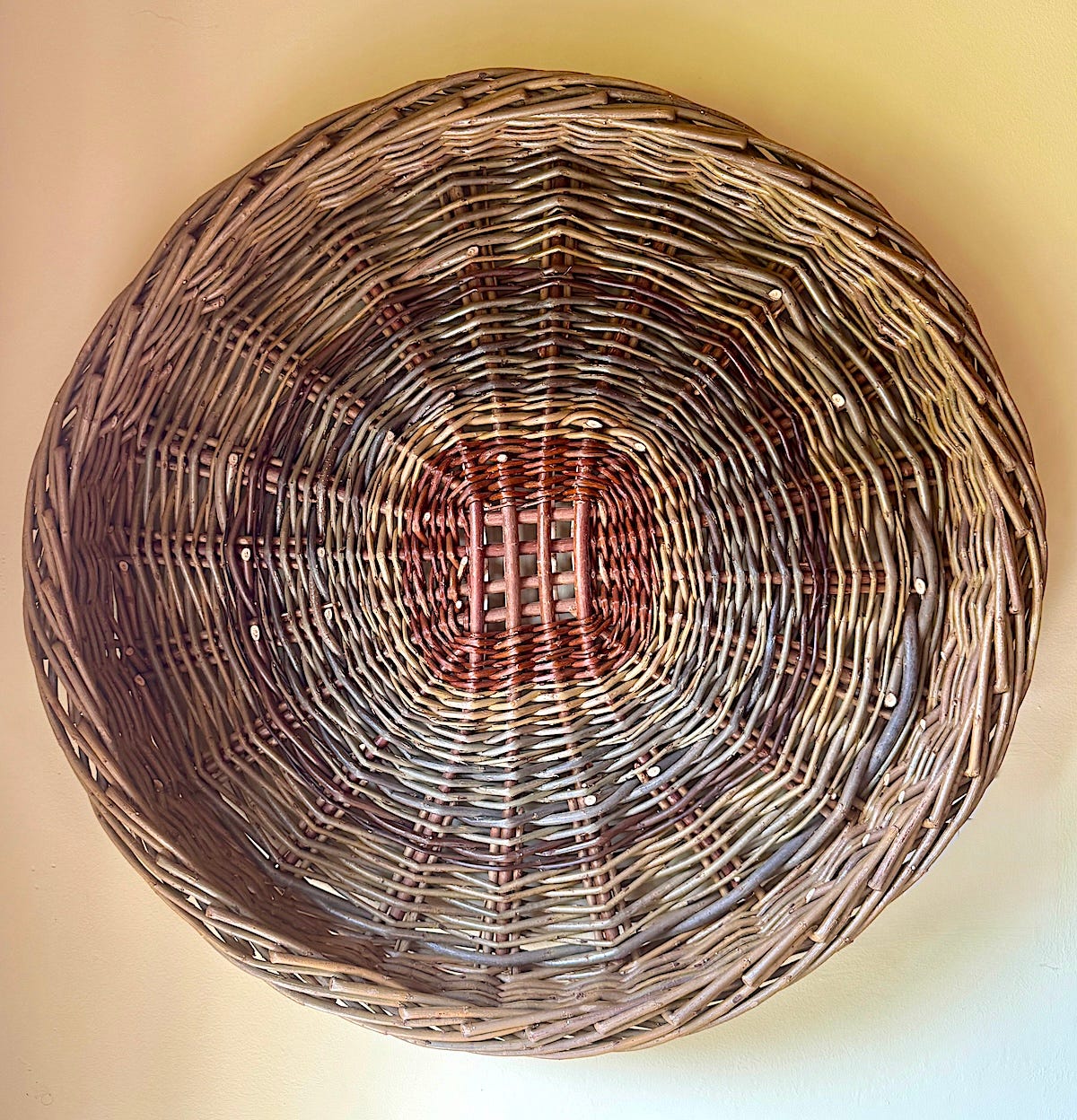
Among the various pieces displayed in the workshop, one particular item catches my attention – a traditional Irish sciob, a willow colander used for draining potatoes. In Aoife's hands, this humble kitchen necessity has been elevated to something approaching sculpture, its woven structure creating patterns of light and shadow that dance across the workshop wall.
She lifts a completed sciob from the wall display, holding it so the morning light filters through its woven openings. "The sciob is the perfect example of what I love about traditional Irish craft," she explains. "It was made to solve a practical problem – every Irish kitchen needed a way to drain the potatoes that were the staple of our diet. But look at the beauty that emerged from that necessity."
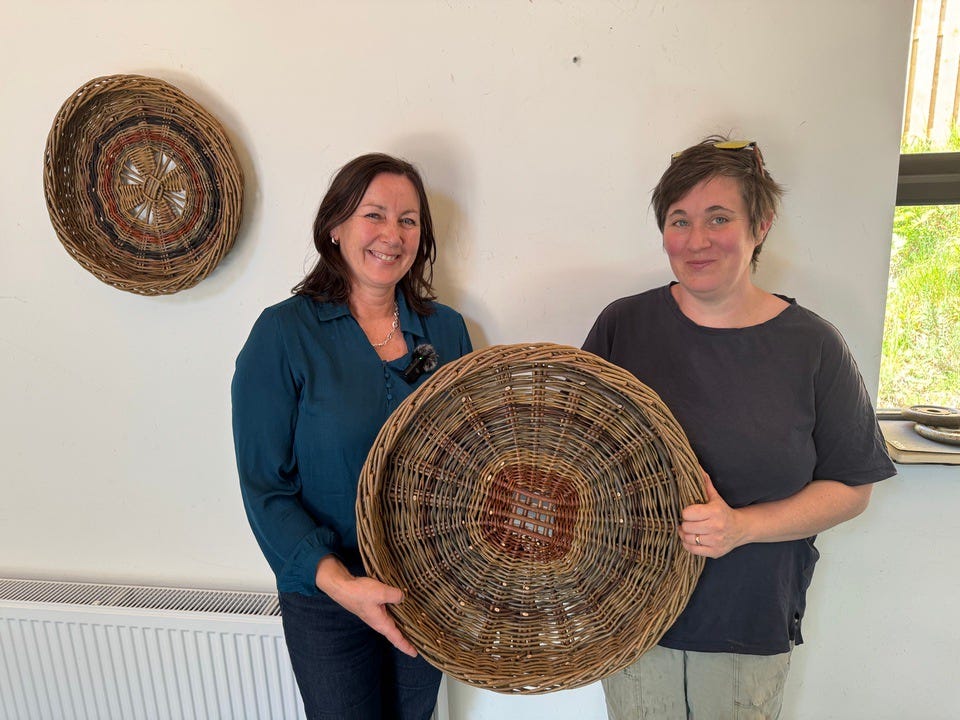
She traces the intricate weave with her finger, showing how the pattern isn't arbitrary decoration but functional design. The spacing of the weave allows water to drain efficiently while keeping even the smallest potatoes secure. The handle placement ensures balance when full. The rim construction provides durability for years of daily use.
"This is what happens when craft serves life rather than mere commerce," Aoife explains, running her finger along the sciob's rim. "Every element has a purpose, but the maker's pride demands that purpose be expressed beautifully."
From Crisis to Craft
Pat Reid appears briefly from the back of the workshop, his quiet presence complementing Aoife's more animated explanations. Originally from Athy, he brings his own archaeological background to their partnership. Like Aoife, he found himself drawn to willow craft during the economic downturn of 2010, when traditional career paths suddenly seemed less certain.
"The skills transfer more than you might expect," he mentions when asked about the transition from archaeology to craft. "Both require patience, attention to detail, respect for traditional methods."
Their shared archaeological training informs their approach to willow work – they understand the historical context of what they're preserving, the cultural significance of techniques passed down through generations. But more importantly, they recognise that keeping tradition alive requires adaptation, not mere preservation.
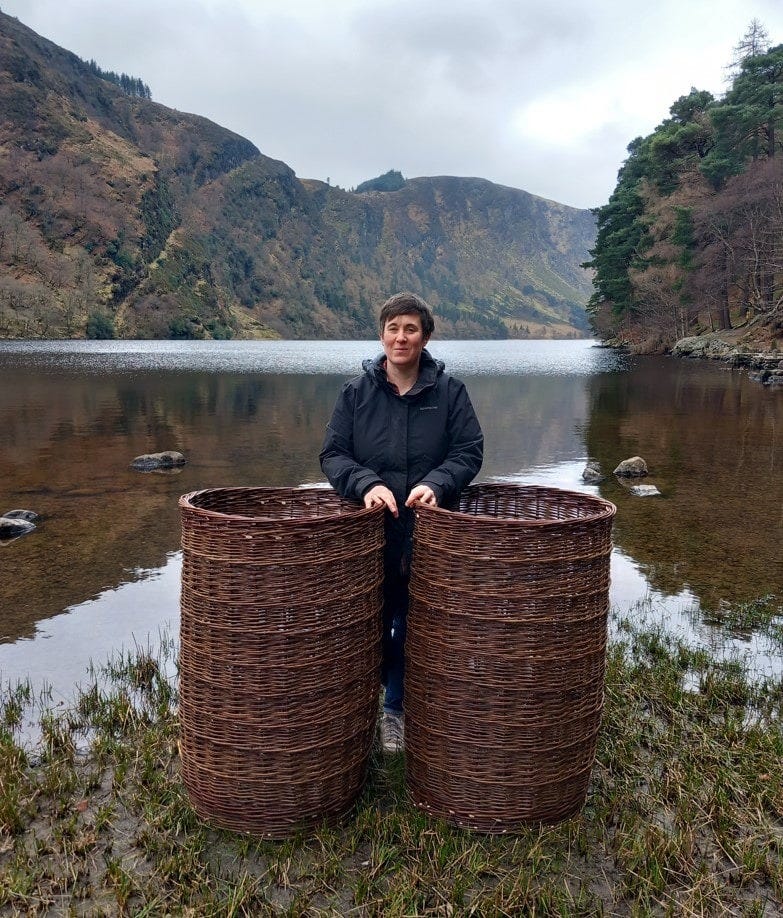
The transition wasn't without challenges. Competing with mass-produced alternatives remains an ongoing struggle, as does educating customers about the value of handmade goods.
"People have forgotten what real quality feels like," she says, comparing one of her baskets to what you might find in a chain store. "They see similar shapes and wonder why mine costs more. But touch them both, use them both for a year, and the difference becomes obvious."
Yet despite these economic pressures, Wicklow Willow thrives. Their pieces find their way to homes where beauty and function are equally valued, where the story behind an object matters as much as its appearance. For Aoife, whose family roots run deep in this Wicklow soil, the work represents more than economic survival – it's a way of honouring both place and tradition.
The Workshop as Sanctuary
People from all walks of life come to learn from Aoife, their movements still conscious and deliberate where hers have become intuitive. From the examples around the workshop, I can see the learning curve – early attempts that show promise but lack the subtle refinements that come only with experience.
"Teaching willow work is like teaching music," Aoife explains, gesturing toward the half-finished sciob. "I can show you the techniques, explain the principles, but the real learning happens through repetition, through failure, through gradually developing the sensitivity to feel what the material wants."
The Sciob Comes Home
As our visit draws to a close, I find myself drawn repeatedly back to the sciob that caught my attention earlier. There's something about its marriage of function and beauty that speaks to deeper hungers – the desire for objects that serve not just practical needs but aesthetic and spiritual ones as well.
"That one wants to go home with you," Aoife says with a knowing smile. "I can tell."
She's right. The sciob represents everything I've witnessed this morning – the persistence of tradition, the marriage of beauty and utility, the irreplaceable value of human craftsmanship. But more than that, it carries the story of Irish domestic life, the countless kitchens where similar sciobs drained countless potatoes, feeding feeding Irish families for generations..
"Every time you use it – or even just see it hanging on your wall – you'll remember that someone's hands made this," Aoife says as she wraps it carefully. "In a world of anonymous objects, that connection matters."
She's absolutely right. The sciob now hangs in our kitchen, where it serves as daily reminder that the ordinary can be extraordinary, that necessity need not sacrifice beauty, that in the right hands, even the humblest materials can become art.
The Resistance of Beauty
As we prepare to leave Wicklow Willow, I realise we've witnessed something rare and precious – a craft that refuses to be tamed by modern efficiency, a practitioner who chooses excellence over expediency, a tradition that survives not through nostalgia but through continued relevance.
In Aoife's hands, willow weaving becomes a form of quiet resistance against the homogenisation of modern life. Every basket she creates argues for uniqueness over uniformity, quality over quantity, beauty over mere function. Her work insists that some values cannot be mechanised, some knowledge cannot be digitised, some skills cannot be outsourced.
"People ask me if I worry about willow weaving dying out," Aoife says as we gather our things. "But as long as people hunger for beauty, for connection to the natural world, for objects made with care and intention, there will always be a place for this work."
Pat nods from the background. The archaeologist in both of them understands that civilisations rise and fall, technologies come and go. But human needs remain constant – the need for beauty, for connection, for meaning. That's what craft provides.
And perhaps that's the deepest gift of places like Wicklow Willow – not just the beautiful objects they produce, but the reminder they provide that in our rush toward an automated future, we must not lose sight of what makes us most human: the ability to create beauty with our hands, to find meaning in materials, to transform necessity into art through patience, skill, and love.
Mike.
Wicklow Willow offer willow pieces (such as the Sciob featured) and one-off items such as garden sculpture. They also offer one or two day courses where you get to weave, and keep, your own piece. See more at: https://wicklowwillow.ie/