


The security guard at University College Cork looked slightly puzzled when Carina and I ask for directions to the Ogham stone collection. "North Wing of the Quadrangle," he says, glancing at my tourist map of Cork city. "Follow the stone corridor."
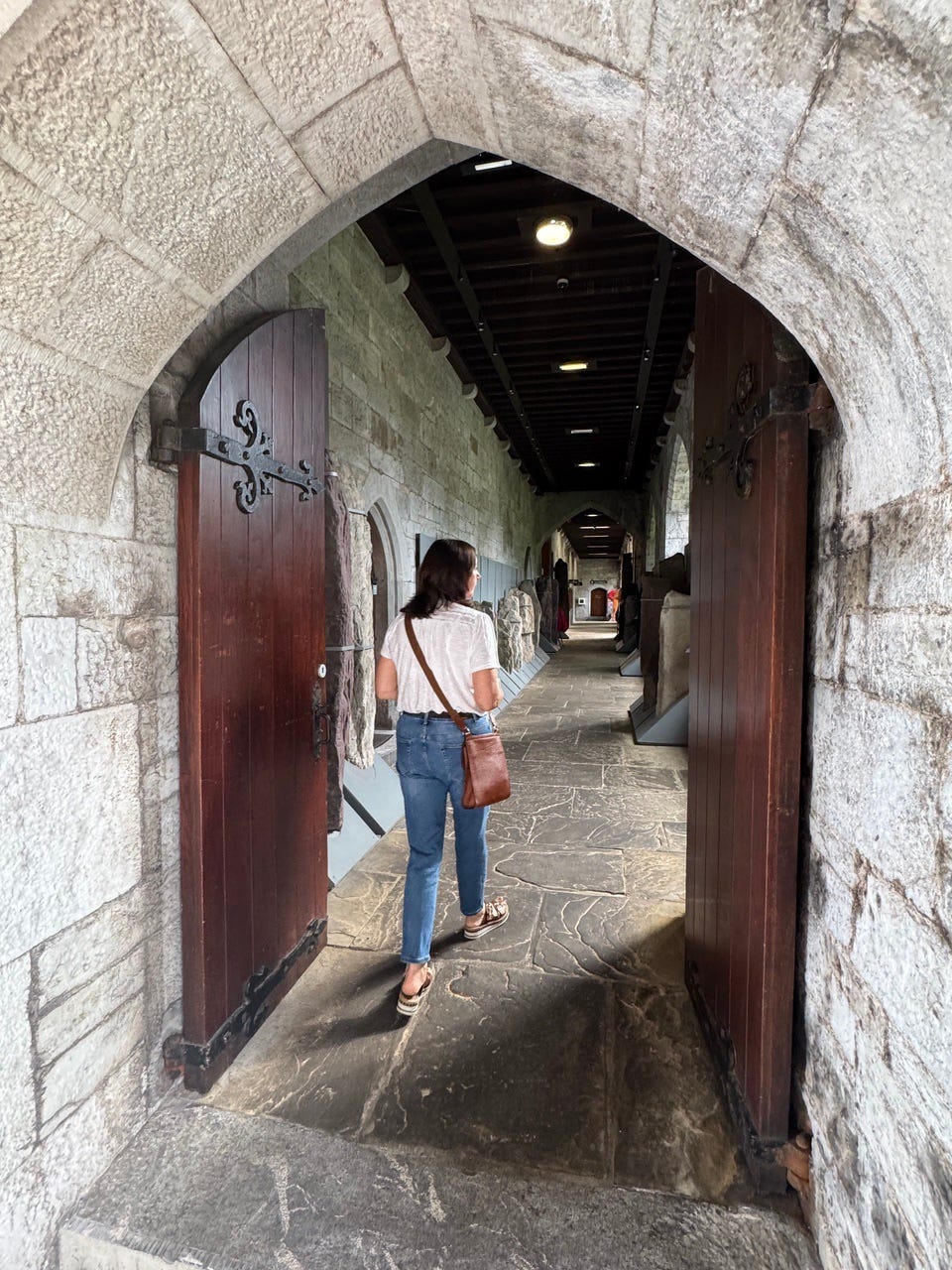
So, that's exactly why we're here on this quiet Monday morning in August. With the university outside term time, we almost have the entire campus to ourselves. Hidden away in the North Wing of UCC's historic Quadrangle, twenty-eight stones wait in quiet assembly along a stone corridor - the finest collection of Ogham inscriptions in Ireland. After a decade of seeking out standing stones across Ireland, from remote Donegal hills to windswept Kerry peninsulas, we've finally made it to this famous collection located just on our doorstep.
These aren't replicas but actual stones carved by Irish hands between the 4th and 7th centuries, when Latin was still a foreign tongue and Irish kings ruled from ring forts scattered across Munster's hills.
An Alphabet Carved from the Landscape
We walk into the North Wing and find ourselves along a stone corridor face to face with Ireland's earliest written words. The ancient stones line this passageway like silent sentinels, each with the distinctive edge-carved lines that make Ogham instantly recognisable.
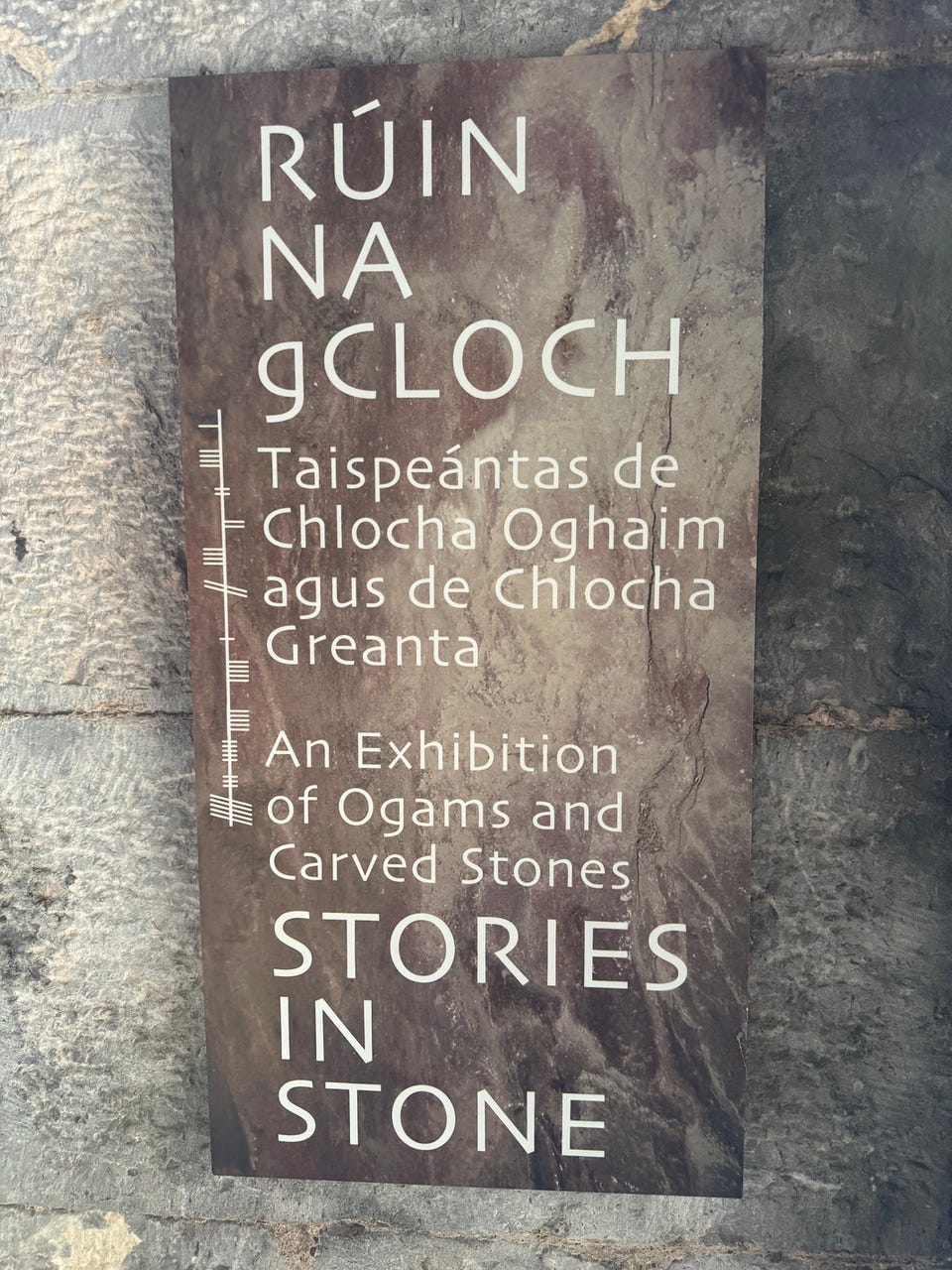
The presentation is excellent. There are informative plaques, good lighting, clear interpretations. UCC has done remarkable work preserving these treasures. Yet standing here in the academic quiet, I can't shake a slight uneasiness that grows stronger as we move from stone to stone.
The alphabet fascinates me because it represents something uniquely Irish, a script that emerged from the landscape itself. Unlike Latin letters borrowed from Mediterranean civilisation, Ogham grew from native tradition, its strokes mimicking natural lines found everywhere in Irish countryside: the edge where stone meets sky, the place where branch meets trunk, the intersection of ancient walls.
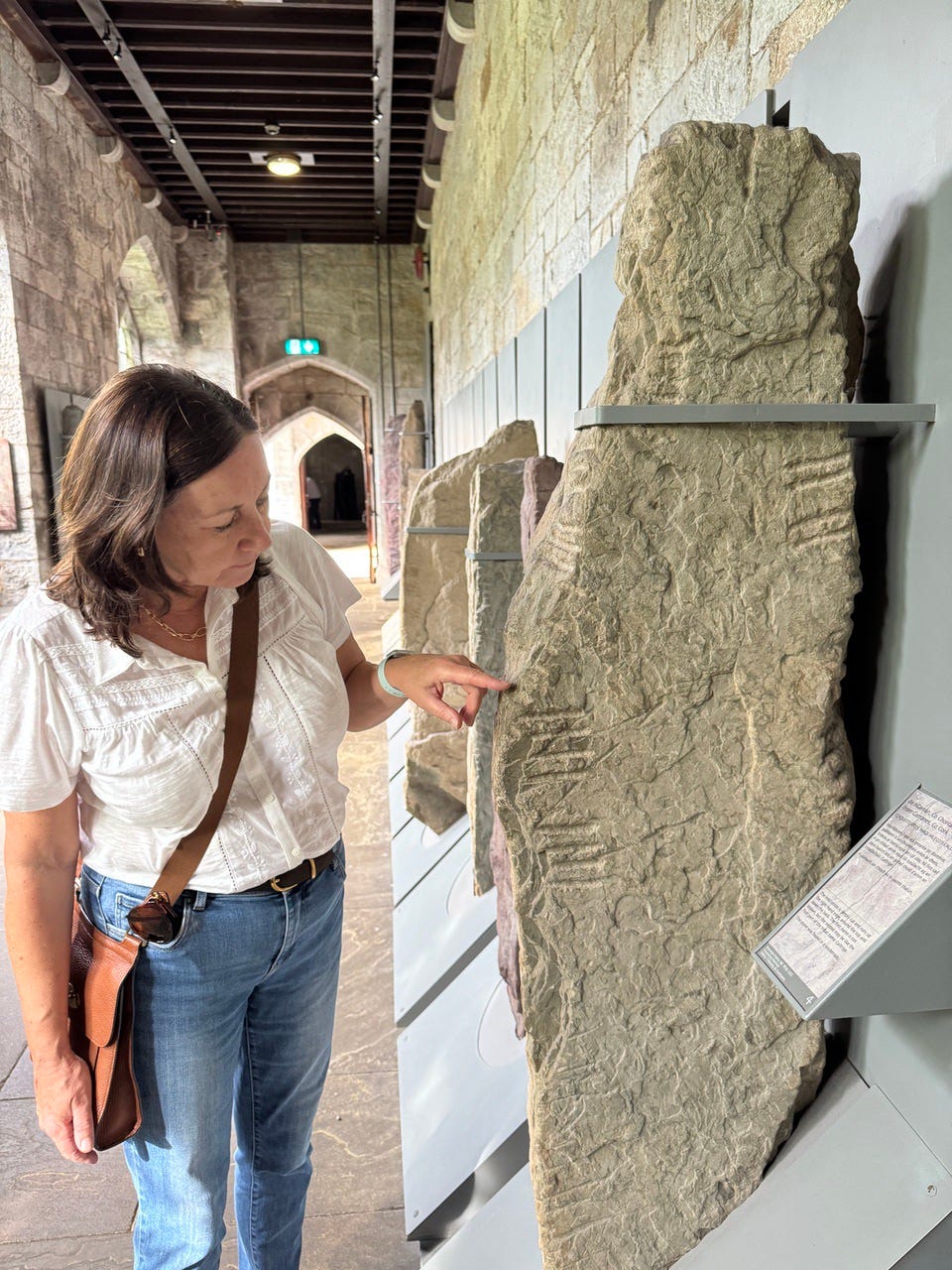
Yet here, removed from those landscapes, something essential feels missing.
In the Zoo Versus in the Wild
As we move through the collection, the feeling crystallises: this is like visiting animals in a zoo. Excellent for education, invaluable for preservation, informative beyond measure, but somehow lacking the essential wildness that makes these stones truly come alive.
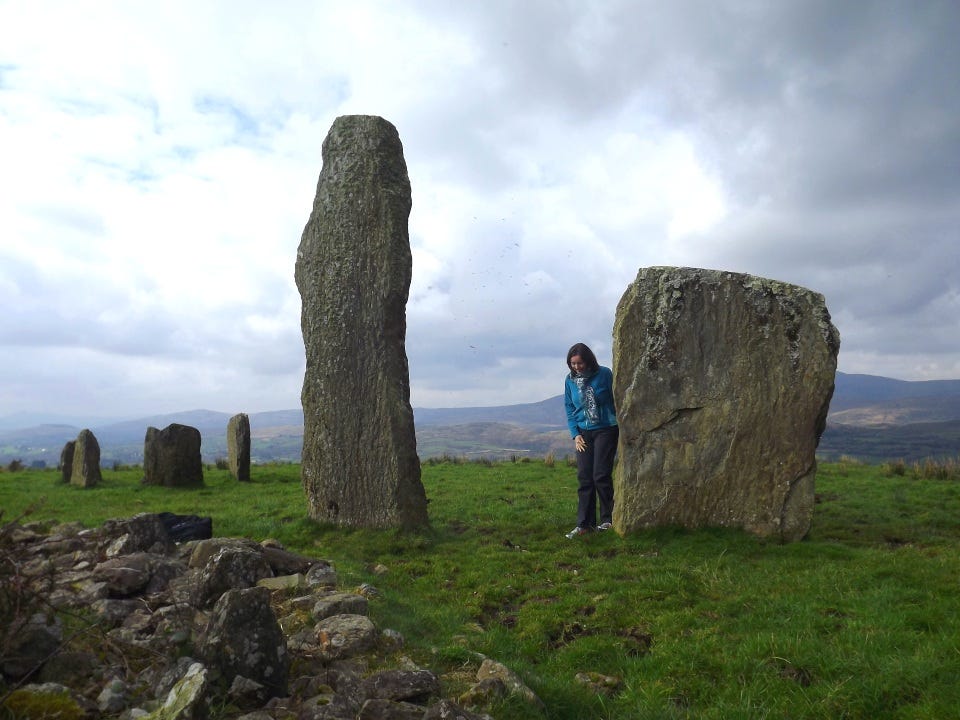
Over the past decade, we've sought out dozens of standing stones across Ireland. Each encounter felt like a conversation between stones and their chosen landscape, a dialogue fifteen centuries in the making. But here in UCC's stone corridor, that conversation feels muted. These stones were born to stand in specific places - marking boundaries and commemorating lives in landscapes that gave those lives meaning. Removed from their original settings, they become specimens rather than active participants in an ongoing story.
The Case for Seeking Them Wild
Don't misunderstand me, the UCC collection is extraordinary, and if time constraints mean choosing between seeing no Ogham stones at all and visiting this remarkable grouping, the choice is obvious. The preservation work here is invaluable and the educational value immense.
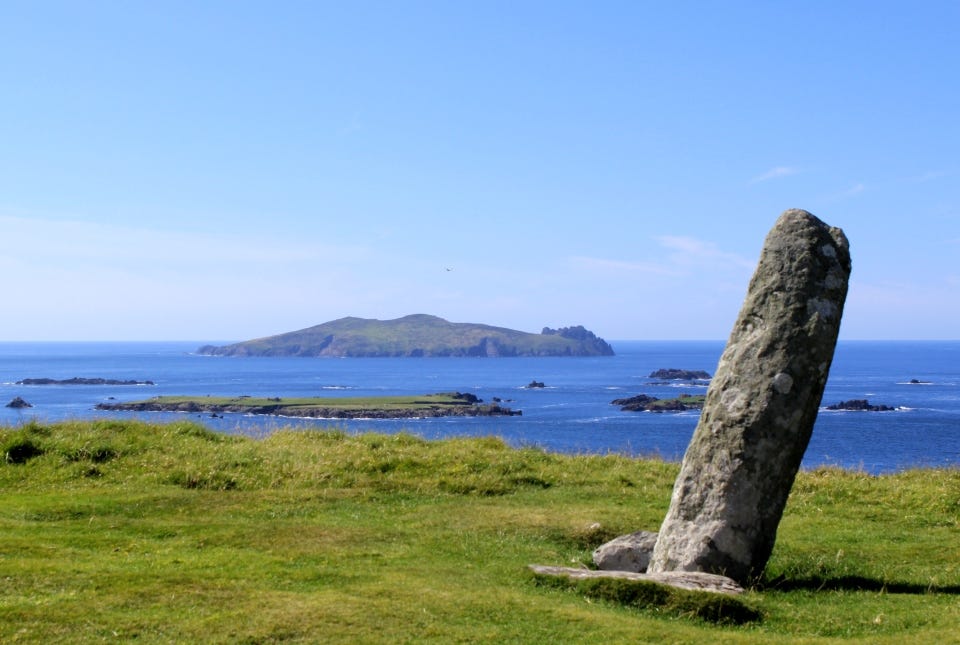
But if you have the opportunity, if you can spare the time for exploration, I'd urge you to travel to the stones that remain in their original settings scattered across some of Ireland's most scenic regions. There's something irreplaceable about finding an Ogham stone standing alone in a Kerry field, aligned with distant mountains, or marking the edge of a Cork townland where the same families have lived for generations.
In those settings, the stones retain their power as boundary markers, territorial claims, memorials to lives lived in specific landscapes. The carved names aren't just historical curiosities but echoes of people who walked these exact hills, who knew these views, who chose these precise locations for reasons we can still sense if we stand quietly and pay attention.
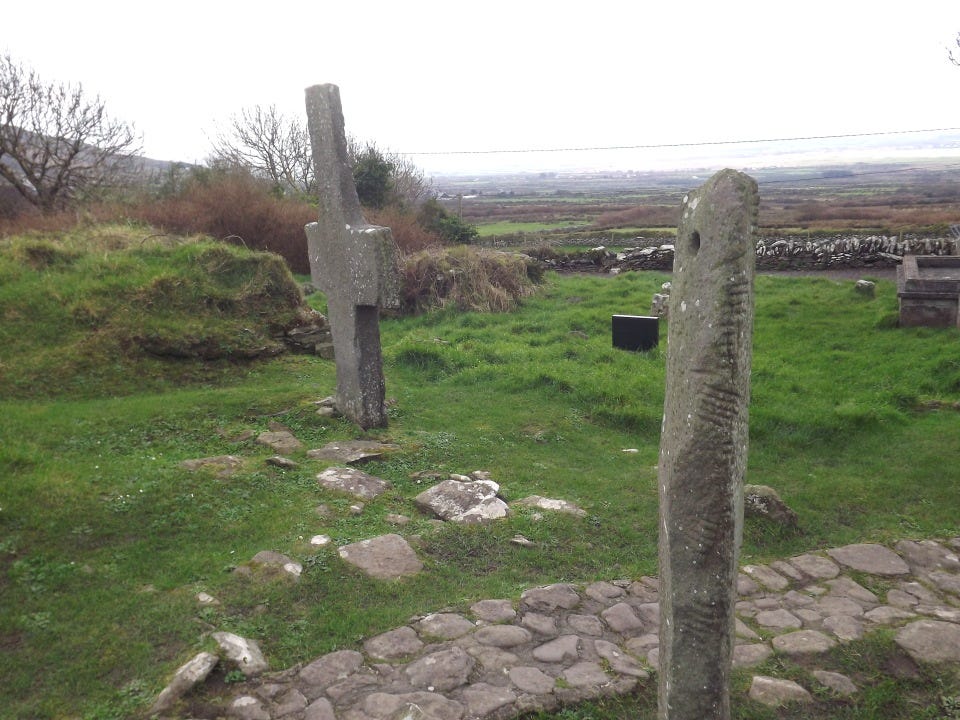
The scattered stones of Kerry, Cork, and Waterford offer something no museum can provide: the chance to experience Ogham writing as it was meant to be experienced -not as isolated artefacts but as integral parts of an ancient cultural landscape that continues to shape the countryside around them.
As we continue along the stone corridor, Carina and I chat about the preservationists' dilemma that these stones represent. Dr. William Windele and other 19th-century antiquarians who gathered these stones faced an impossible choice. Many were already serving as gateposts or corner markers, their carved messages invisible to farmers focused on more immediate concerns. Without intervention, these voices from the deep past might have been reduced to rubble for road foundations.
Learning to See
Leaving UCC that Monday morning, Carina and I carry with us both gratitude for what we've learned and renewed appreciation for our decade of stone-hunting across Ireland. The collection has deepened our understanding of Ogham script and early Irish culture in ways that isolated field encounters never could.
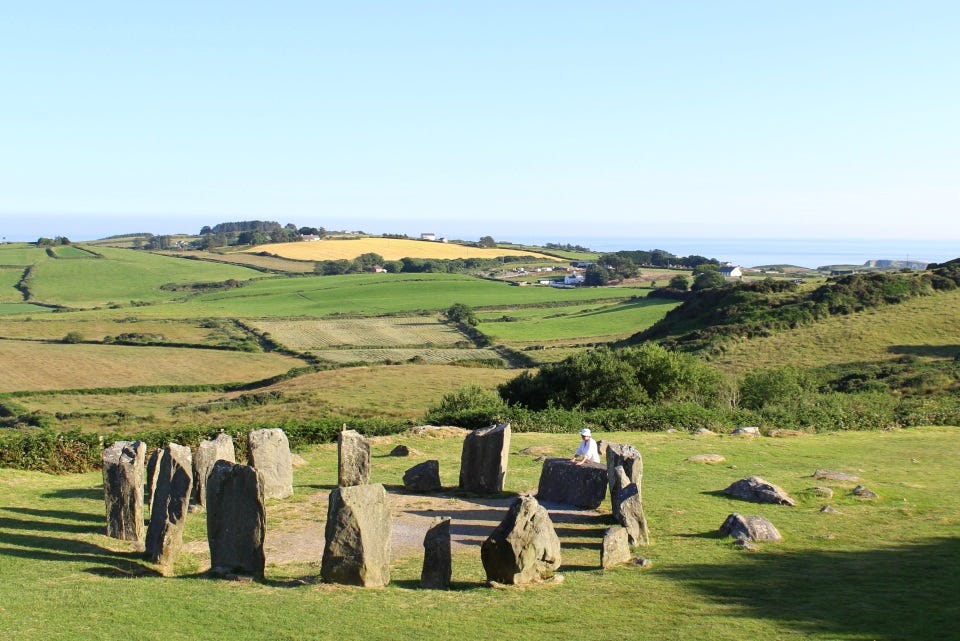
But it has also reinforced our conviction that some experiences cannot be replicated in controlled environments. Those ancient field walls no longer seem like arbitrary boundaries but potential repositories of forgotten knowledge. Every standing stone becomes a possible bearer of messages from the deep past.
The stones we've encountered over the years - wind-battered and standing in their chosen landscapes - offer something the UCC collection, for all its scholarly excellence, cannot provide: the sense of place, the understanding that these monuments were always meant to be part of larger conversations between people and landscape that continue to this day.
A Choice of Encounters
Walking back into Cork city after our visit, we carry a clearer understanding of what we've been seeking all these years in remote fields and forgotten corners of Ireland. If your time in Ireland is limited, if scholarly context matters more than atmospheric discovery, if weather or mobility issues make field exploration difficult, then UCC's stone corridor offers a fantastic opportunity to encounter Ireland's earliest writing system in comfort and safety.
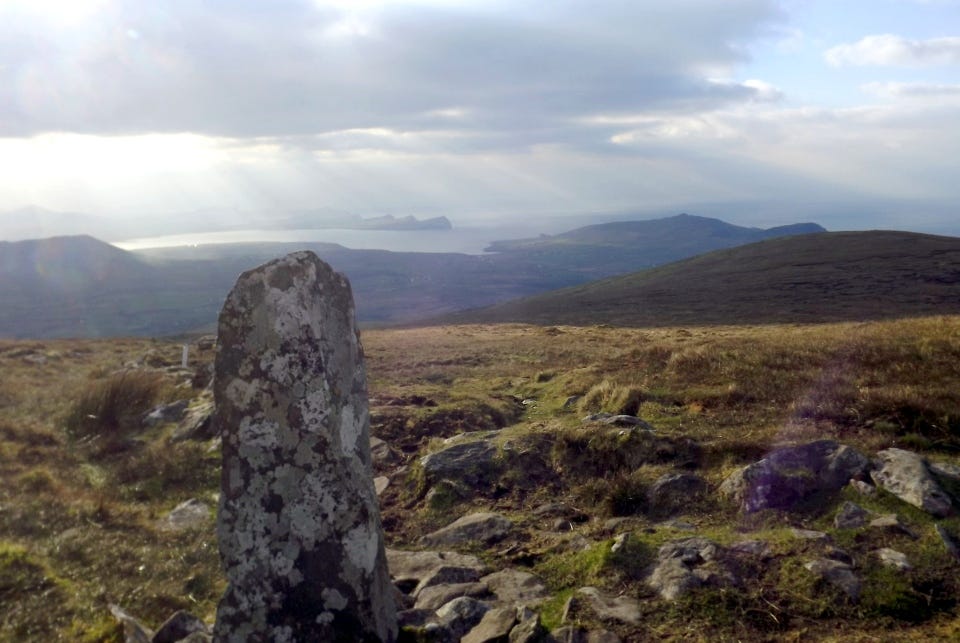
But if you have the time, if you relish the hunt as much as the discovery, if you want to experience these monuments as their creators intended - as markers of territory, and meaning embedded in specific landscapes - then pack/download a good map, a pair of boots for the mud, and go to the stones that still stand where ancient hands placed them.
In our rush toward a digital future, both the preserved stones at UCC and those still standing wild in Kerry fields offer the same essential wisdom - the understanding that some messages are worth preserving in the most permanent medium we know. They remind us that the impulse to communicate, to connect across time, transcends technology and speaks to something essential in human nature.
The stones continue their quiet conversation across fifteen centuries, whether displayed in academic corridors or standing sentinel over ancient landscapes. For those willing to listen - be it in museums or muddy fields - the conversation continues.
Mike.