


It’s a lovely summer’s evening as Evan and myself head along South Main Street - a modern street lying over Cork City’s buried medieval centre. With each step, it feels as though we’re walking back in time.
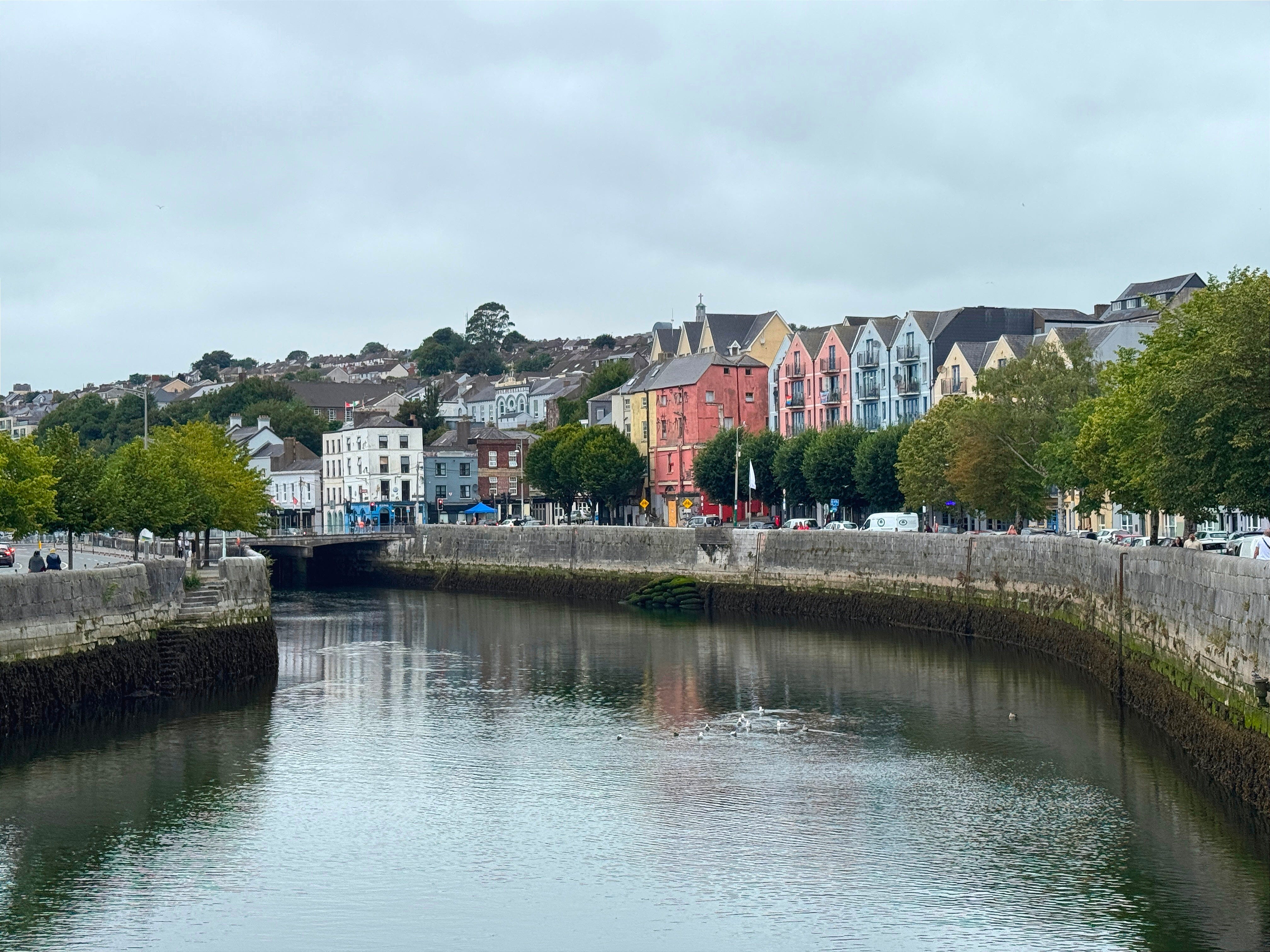
This isn’t just a stroll to find a good pint of beer. It’s a journey that follows water itself — from Viking longships to holy wells to the heart of Cork’s craft beer revival.
At the Franciscan Well Brewery
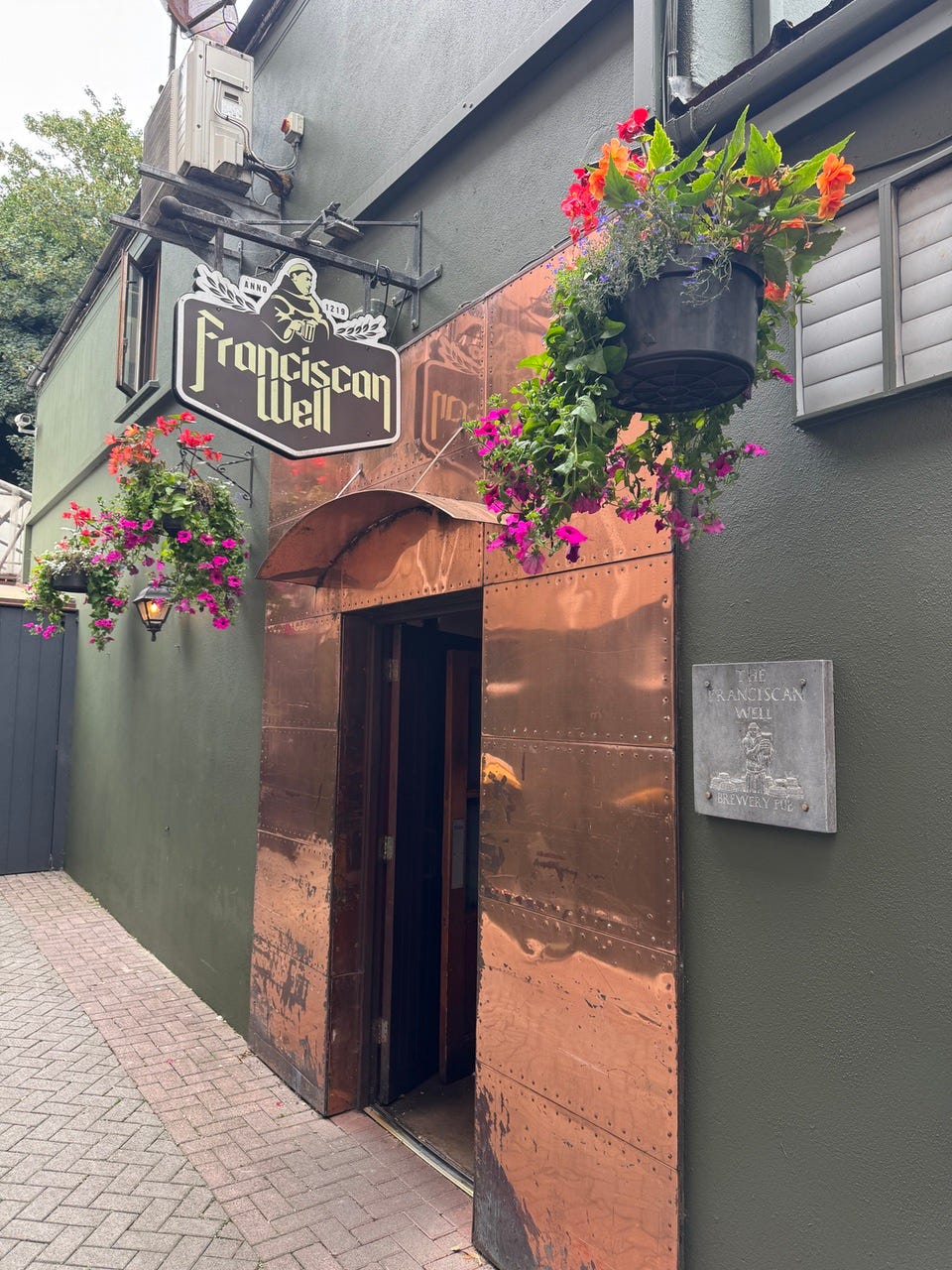
We arrive at the Franciscan Well Brewery, and immediately there’s something different in the air. The copper tanks and the scent of hops are familiar to any modern brewpub, but here, the stone walls seem to hum with older stories.
This courtyard has seen a thousand years of history pass through. Behind today’s beer taps and fermenters lies a deeper legacy — one shaped by raiders, pilgrims, friars, and brewers, all drawn here by the same vital element: clean, pure water.
Even the silence here has layers. Beyond the low rumble of brewing equipment, you can almost hear echoes: the chant of monastic prayer, the splash of Viking oars, the murmur of weary travellers pausing to drink from a spring they trusted with their lives.
There’s an invitation in the stillness — to slow down, to listen, and to remember how Cork’s story has always flowed from its water.
The Vikings Find Their Harbour
It begins, of course, with water. Cork — like so many Irish cities — owes its very existence to the meeting of river and sea. But this story is more specific than geography.
Sometime in the 9th century, Norse raiders pulled their longships upriver, searching not just for spoils but for safety. What they found here along the Lee was more than a convenient anchorage: it was a natural confluence of blessings - a navigable channel, with defensible terrain, fresh spring water, and fertile ground.
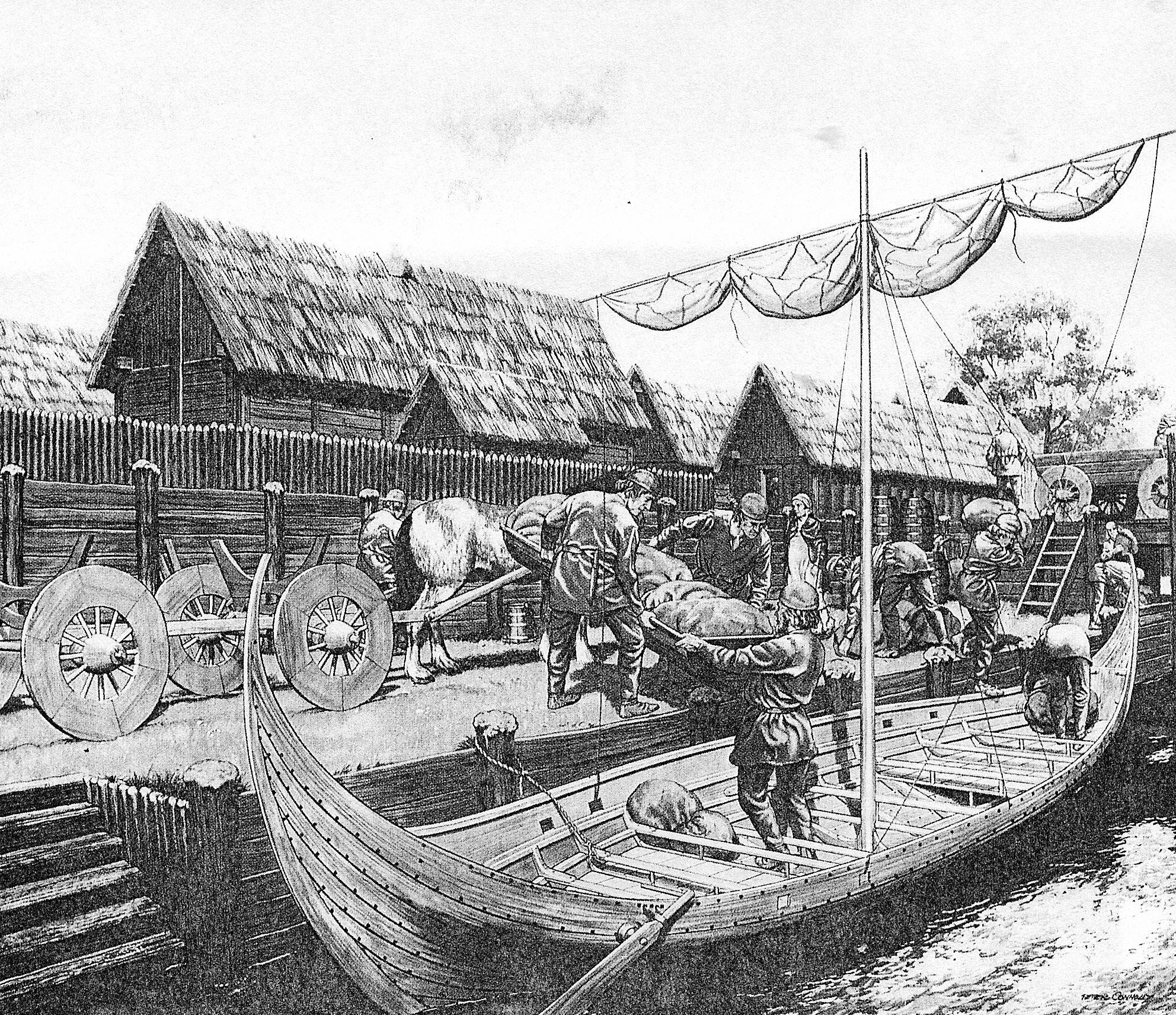
And so a winter camp became a trading post. A trading post becomes a permanent settlement. And something new is created in Ireland: the beginnings of a true city.
Before the Vikings, Irish life centred on ringforts and monasteries. The idea of urban living, with planned streets, market stalls, and specialist trades, was a Norse import that would forever alter the Irish landscape.
Holy Wells: The Source of Healing And Hydration
But not all water is created equal. Across Ireland, holy wells became places of pilgrimage - they were sacred springs associated with saints, healing, and prayer. And while religious faith played its part, so did simple observation.
In an age when disease swept unchecked through towns and cities, people noticed a pattern: those who drank from certain springs stayed healthy. Those who relied on tainted rivers did not.
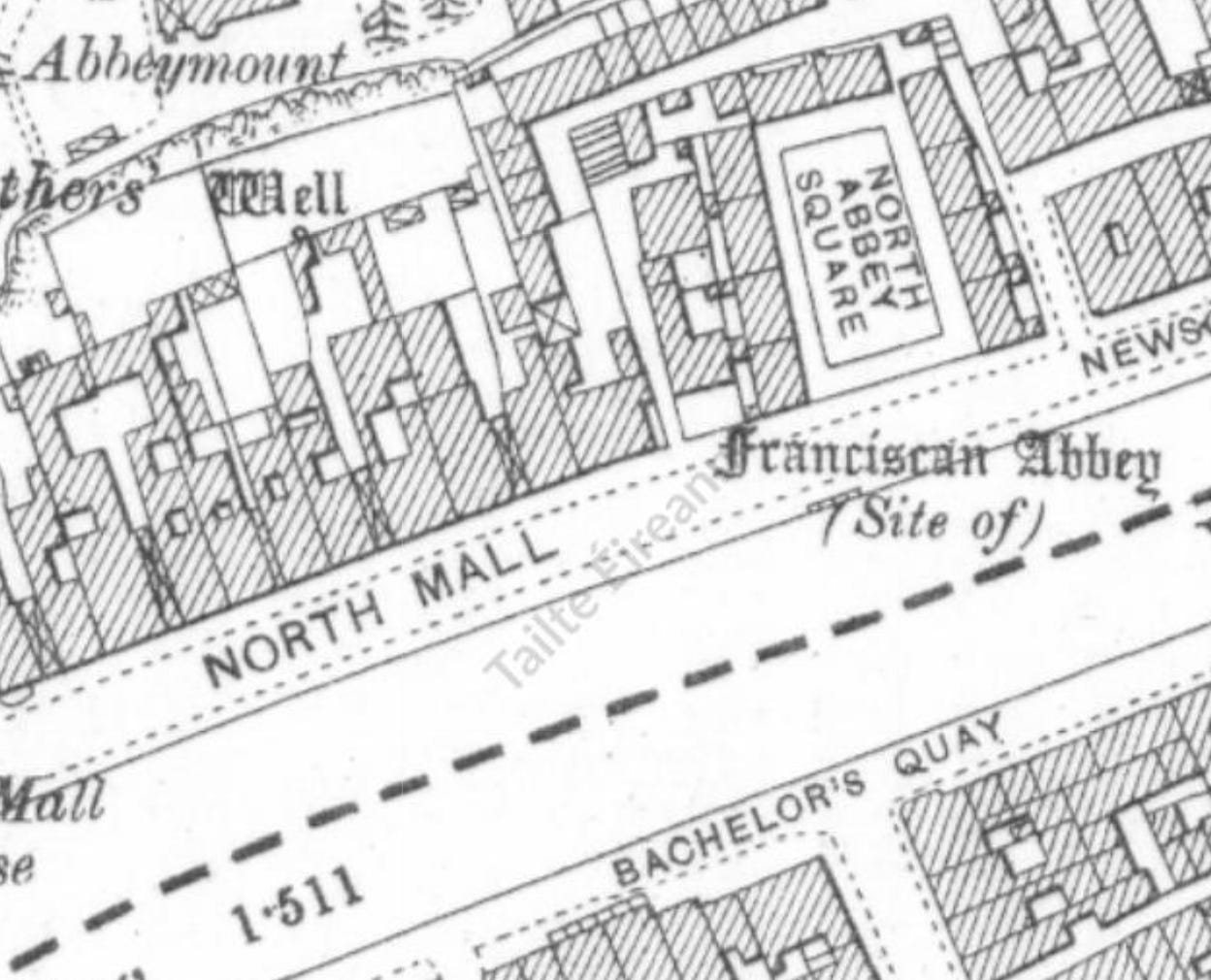
One such spring lay right here, beneath what would become the Franciscan friary. Filtered through limestone and rising pure, the water from this well remained free from the contaminants of an increasingly crowded medieval town. Whether you believed its power came from Saint Francis or from geology, the result was the same — this was water you could trust.
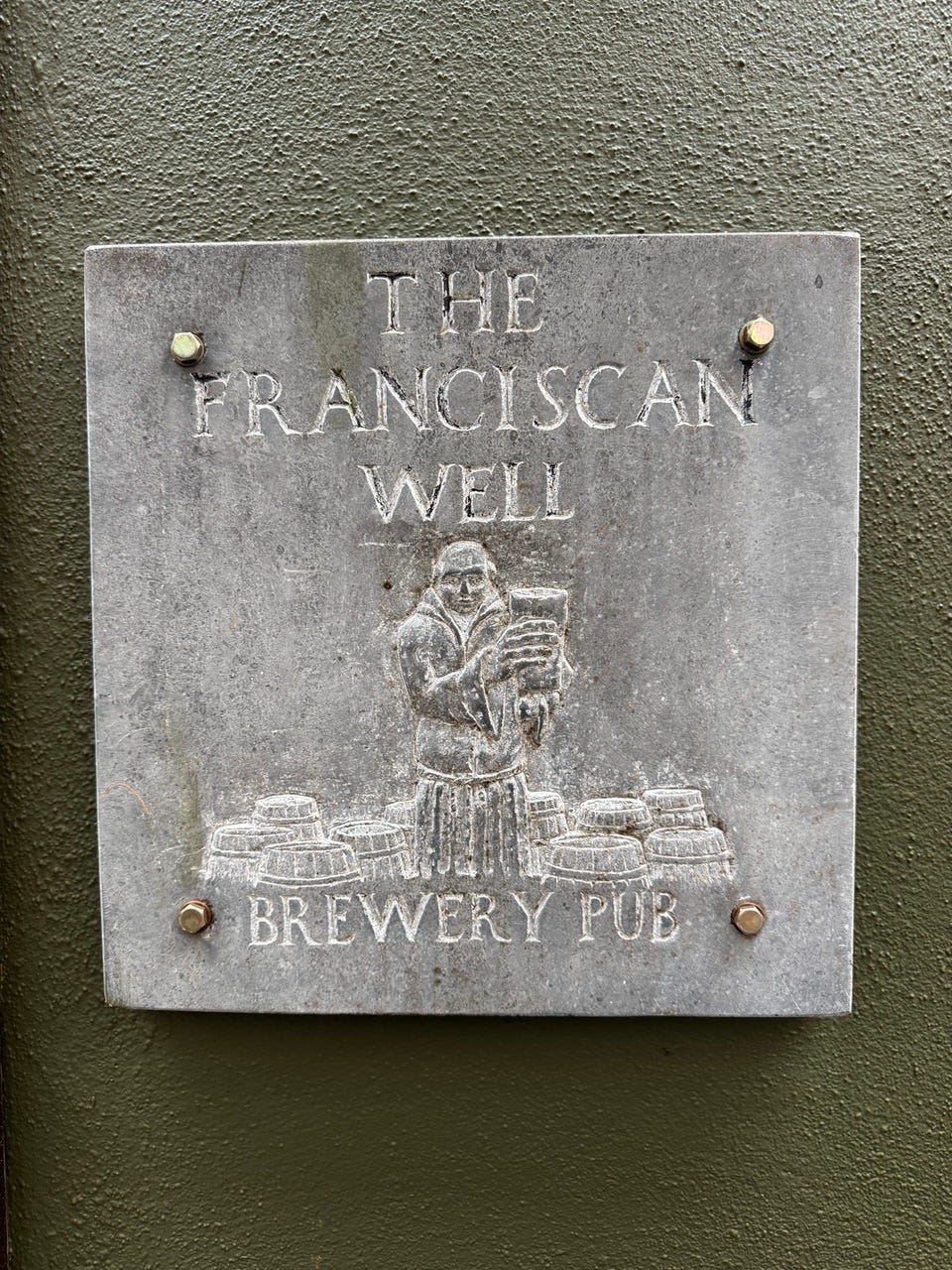
Franciscan Friars: Brewing for Both Body and Soul
By the 1200s, the Franciscans had claimed this sacred spring and built their friary around it. The friars were men of prayer, but also of practical needs. They welcomed pilgrims, fed the poor, and sustained their order through self-reliance.
And yes, they brewed.
Monastic beer wasn’t a luxury, but a necessity. Brewing purified the water, made it safe to drink, and provided daily sustenance. The purity of the well meant their beer was not only safer but consistently good. Over time, it became renowned throughout Munster.
Here, beer served both the spirit and the stomach. The friars perfected their craft, drawing from the same spring that had once quenched the thirst of Viking traders and now nourished pilgrims and townsfolk alike.
From the Sacred to the Secular
The dissolution of the monasteries in the 1500s ended many of these religious brewing traditions, but not the wisdom behind them. Secular brewers quickly took over many monastic sites, recognising that centuries of successful brewing hadn’t been based on prayer alone, but on access to exceptional water.
In Cork, the thread was never fully broken. Brewing continued in one form or another for centuries, and by the time Ireland’s craft beer revival arrived in the late 20th century, the Franciscan Well Brewery (and when they moved on, the current brewpub) reclaimed this ancient ground with a renewed sense of purpose.
Once again, brewers stood over that old spring, drawing water that had sustained life and story for over a millennium.
The Well Revealed
Step into the brewery’s back courtyard, and you’ll find something remarkable: the actual well that gives this place its name. Now forgotten behind a set of bars, the spring has dried up as development took place all around the old friary.
It’s amazing to think that this is no romantic reconstruction, but the real thing. The very source that anchored Viking settlements, nourished monks, and fueled the brewery until quite recently.
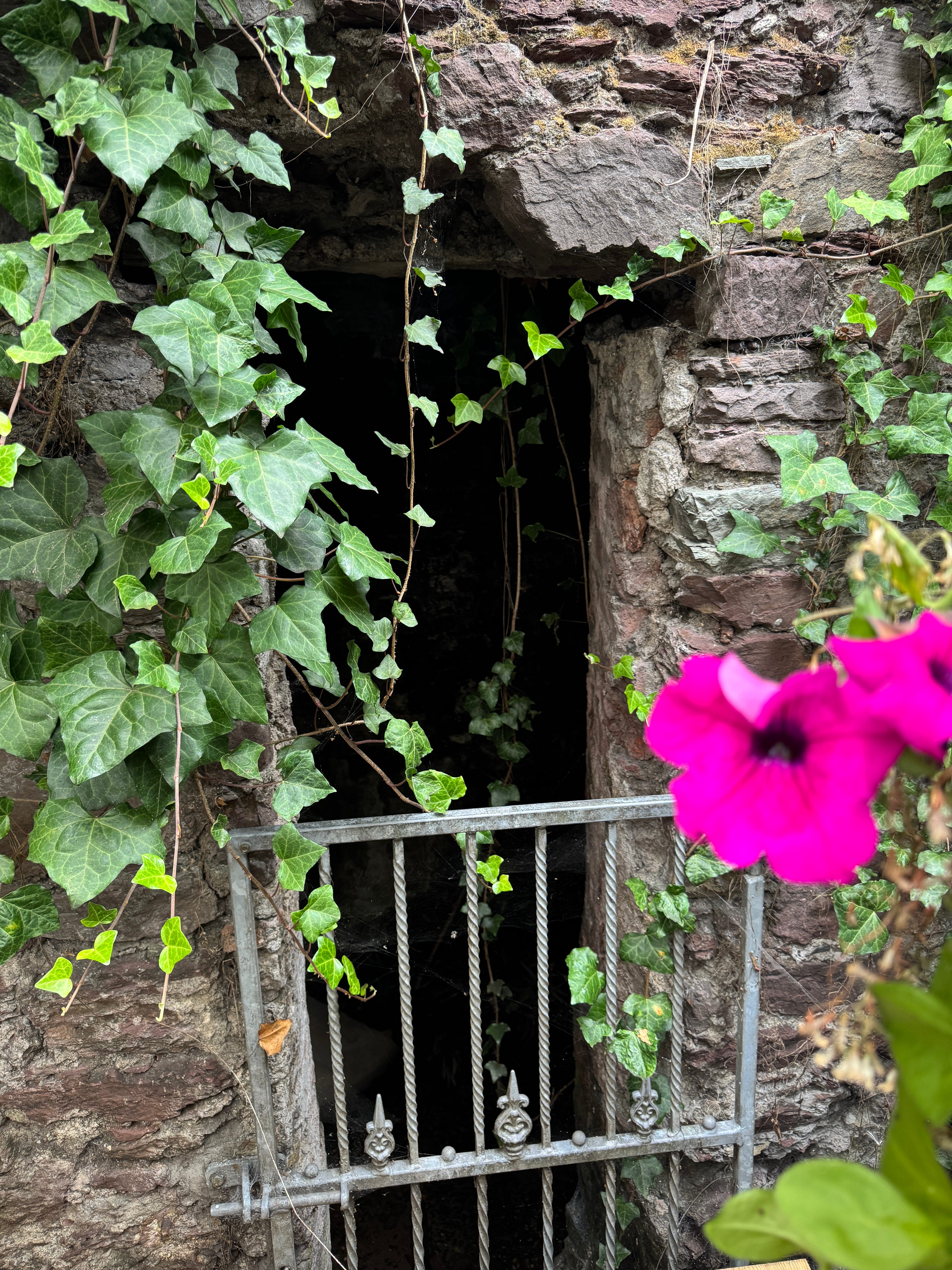
Standing beside it, you can trace a living line through time: water flowing unchanged, while the world above it reshapes again and again. These springs remain constant, but what we do with it - how we gather, and the stories we tell, that is always evolving.
Tasting History
Order a pint at the Franciscan Well, and you’re not just sampling craft beer. You’re participating in a lineage - one that began with Viking explorers, deepened through monastic devotion, and continues today in the hands of passionate local brewers.
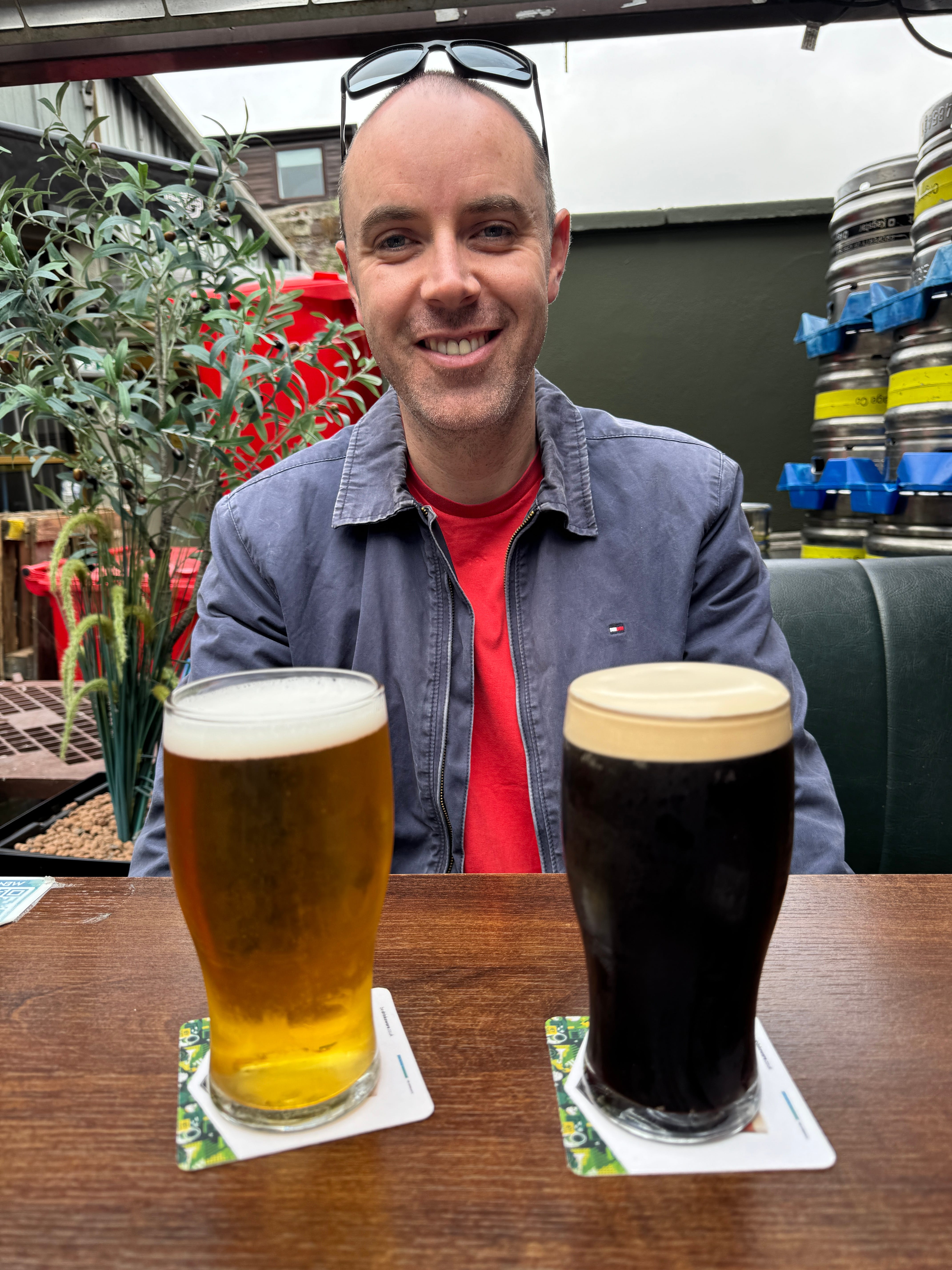
The barley and hops may be modern, the flavours unique to our time, but the foundation is timeless: limestone-filtered water that has sustained this place for over a thousand years.
To taste it is to connect. You’re drinking the same water that once filled the cups of monks and merchants, raiders and pilgrims.
Carrying the Story Forward
So, as dusk falls over Cork and the River Lee reflects the first streetlights, Evan and I make our way back through the old streets, a little quieter now.
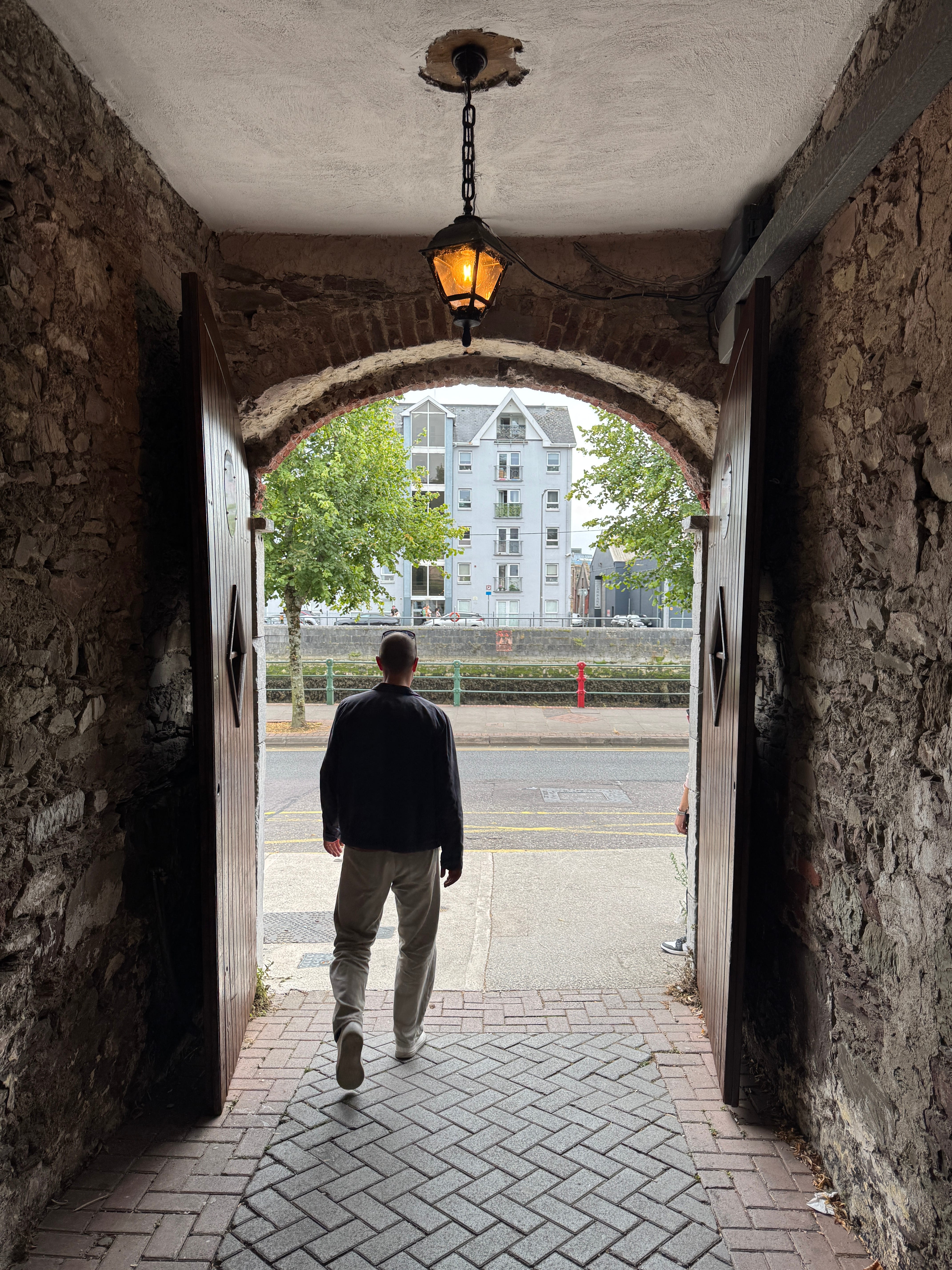
What these wells teach us is simple: clean water sustains more than the body. It builds communities. It gathers people. It preserves memory.
Whether you’re a Viking seeking safe harbour, a friar brewing for survival, or a modern traveller looking for meaning in your pint, the need is the same. And the sources, the wellsprings, they endure.
So next time you raise a glass in an Irish pub, remember the Franciscan Well. Remember that beneath every great story is a spring waiting to be found.
In the Celtic tradition, water is the source of all life and wisdom. And standing beside that ancient spring in Cork, with a glass in hand and centuries of story flowing around us, you can’t help but feel the truth of that ancient knowing.
Sláinte — to the water that sustains us, the stories that connect us, and the wells that nourish both body and spirit.
Mike.