


Just last week, I received this wonderful message from my friend Mary in London:
"Mike, flying into Shannon, I noticed these strange circular shapes in the fields below. My seatmate called them 'fairy forts.' Are they connected to Irish castles somehow? The landscape feels alive with history – I want to explore more!"
Here is my Response: An Invitation to Journey Through Time
Dear Mary,
What a brilliant observation from your airplane window! Those circular shapes you spotted are indeed "fairy forts" - and they're connected to Ireland's castles in the most fascinating way. They represent the very beginning of a story that spans over fifteen centuries of Irish defensive architecture.
So, instead of just explaining this in a letter, why don't you join me on an imaginary journey? Pack your bags (metaphorically speaking), and let's trace the complete evolution of how Irish people have defended themselves, their families, and their way of life. We'll start exactly where your airplane touched down - close to those mysterious circles in the Clare countryside.
Our First Stop: Craggaunowen - Where Ancient Ireland Lives Again
The morning mist remains over the Shannon estuary as we drive away from the airport and follow country roads that meander through the Clare countryside. We feel ourselves slipping into Ireland's layered past with each passing mile.
Those circular shapes you spotted from the airplane, Mary, are scattered across private farmland throughout Ireland - many difficult to visit up close. But at Craggaunowen Heritage Park, just twenty minutes from Shannon Airport, we can step directly into reconstructed versions of those ancient worlds.
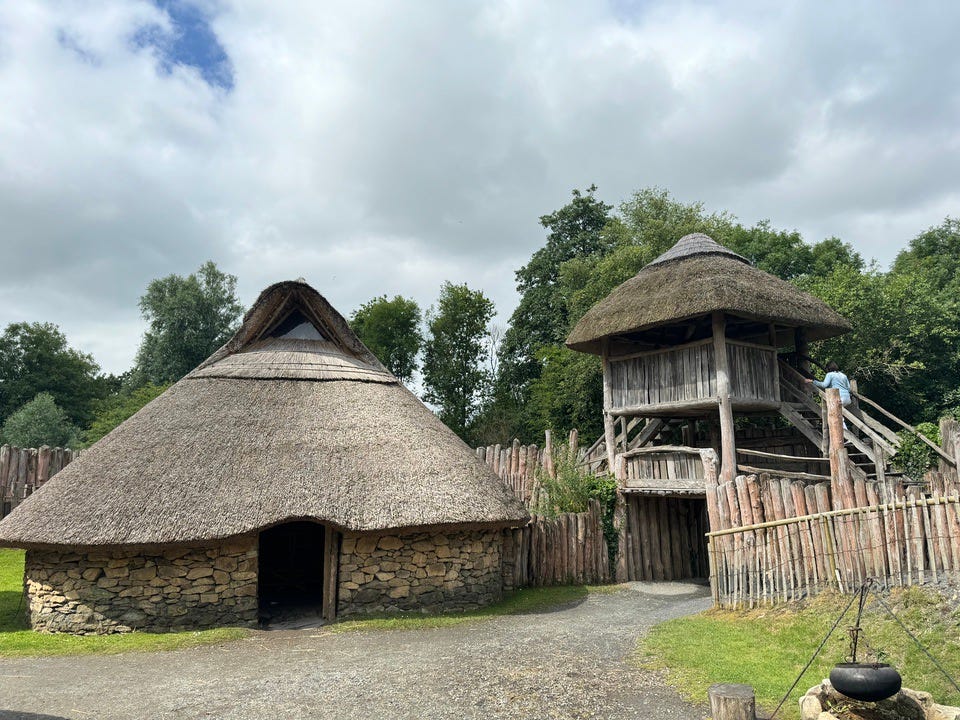
Here we are, Mary, walking through the gates of this remarkable heritage park. Before us stands not just one ring fort, but a complete recreation of how our Iron Age ancestors lived. The thatched roundhouses rise within their protective earthen banks exactly as they would have 1,500 years ago. Smoke drifts from the central hearth, and the smell of woodfire mingles with the morning air.
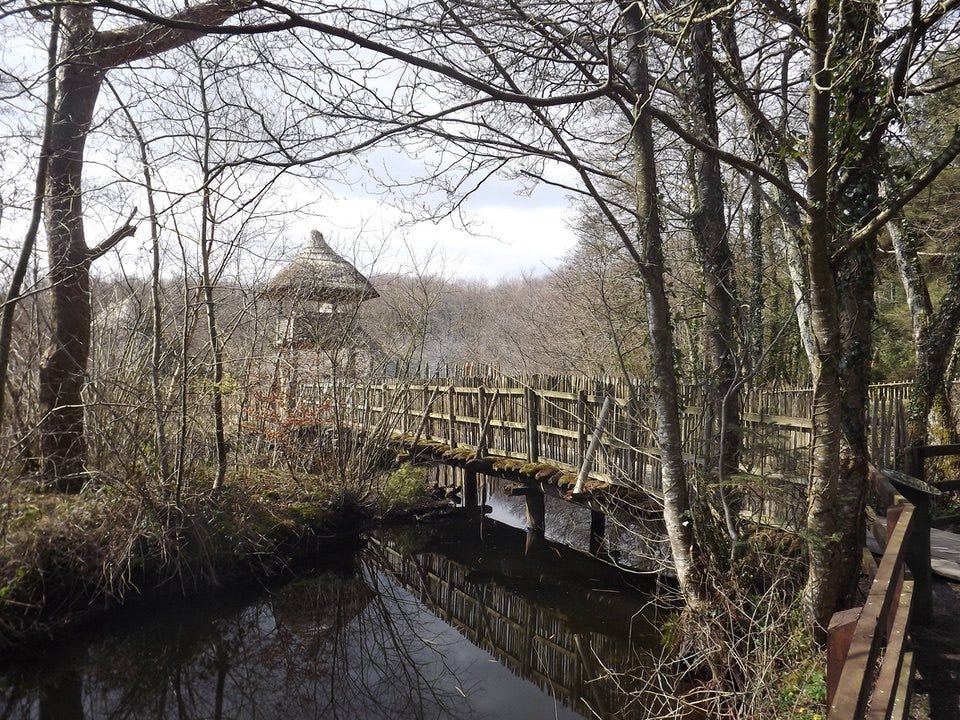
The atmosphere here has a different quality than a museum - it's living history. Children's voices echo from the crannog (artificial island dwelling) on the small lake, while the ring fort settlement bustles with demonstrations of ancient crafts. A blackbird calls from the wooden palisade, a song the same that would have greeted dawn in the 5th century.
This is where Irish defensive architecture begins, Mary. Between 400 and 800 AD, these ring forts – or 'raths' as we call them – were the 'castles of their day. But here at Craggaunowen, we don't just see the earthen remains - we can walk into the fully reconstructed roundhouses and experience how families actually lived within these protective circles.
Standing within the ring fort's wooden palisade, you can truly imagine this space when it pulsed with life. The central roundhouse, with its conical thatched roof and stone-lined hearth, housed a prosperous farming family. Around them, within the protective banks, their cattle and sheep would have sheltered during raids. The earthen walls, topped with wooden palisades and thorny hedges exactly like these, created a formidable barrier against both human enemies and wild animals.
Every county in Ireland has hundreds of these. Some estimate there were once over 50,000 ring forts across the island. They represent our first systematic approach to defense – not grand statements of power, but practical responses to the realities of early medieval life.
These structures have survived not through preservation efforts, but through superstition. Even today, many Irish farmers refuse to disturb fairy forts, believing them to be dwelling places of the "good people." This respect for the old ways has inadvertently preserved thousands of these archaeological treasures.
Our Second Stop: Norman Power at Trim Castle
Come with me now, Mary, as we travel forward in time by nearly four centuries, to Trim Castle in County Meath. The contrast is striking. Where the ring fort spoke of defensive necessity, Trim Castle shouts of military dominance. Its massive stone walls rise twenty metres into the sky, dwarfing everything around them.
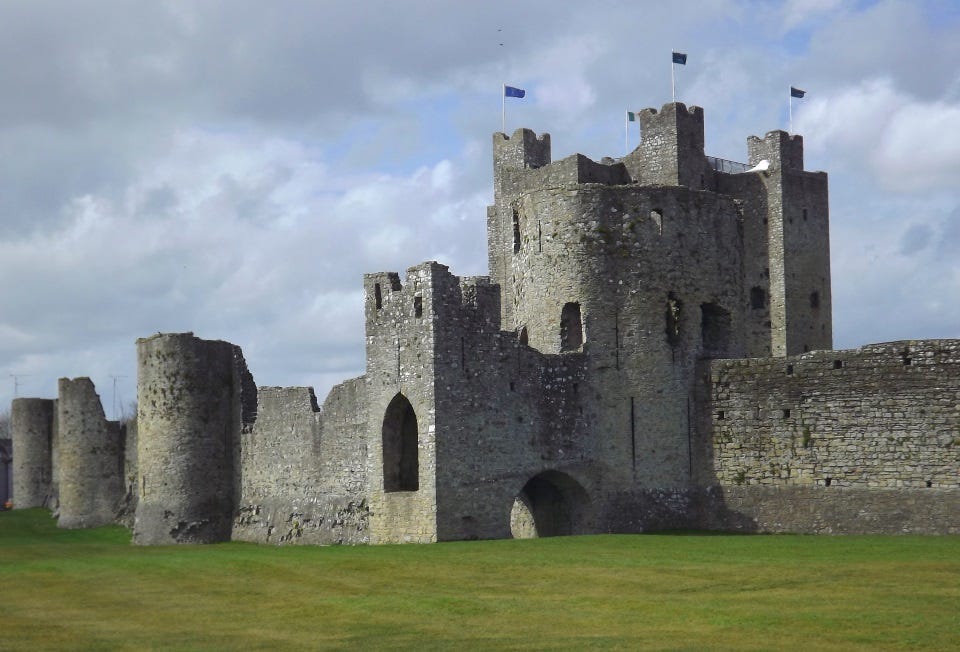
The Normans brought a completely different philosophy of defence when they arrived in 1169. This wasn't about protecting a single family – it was about controlling territory, intimidating the local population, and projecting power across the landscape.
The statistics are staggering. Trim Castle required hundreds of thousands of tons of limestone, transported from quarries kilometres away. The great tower alone took nearly twenty years to complete. Its walls are over three metres thick – built not just to withstand siege weapons but to make a psychological statement about Norman permanence.
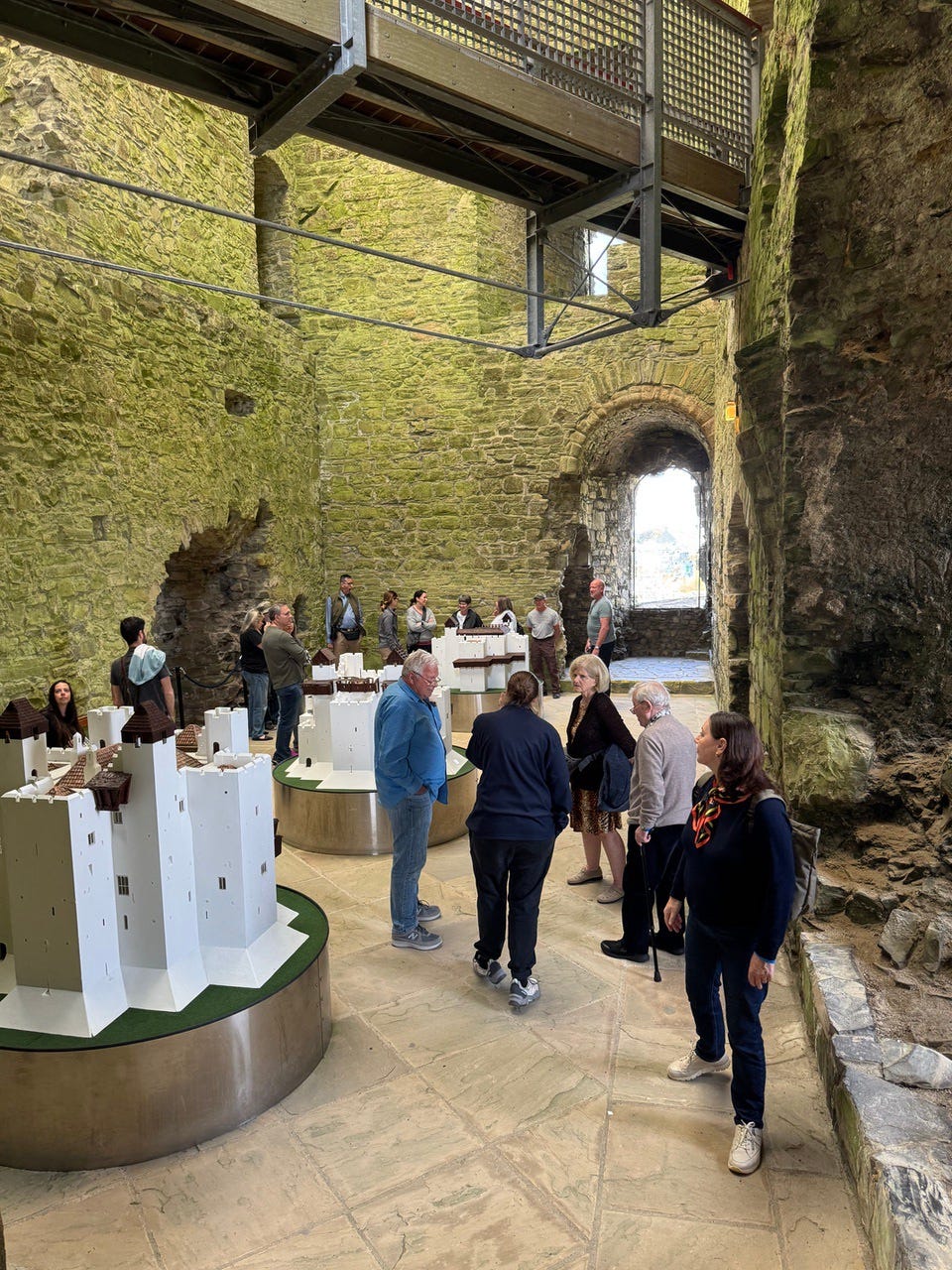
Walking with me through the castle's chambers, you'd be struck by how different this feels from the intimate scale of the ring fort. Here, everything speaks of hierarchy, control, systematic military engineering. The narrow arrow loops, the murder holes above doorways, the spiral staircases designed to favour right-handed defenders – every detail calculated for warfare.
A crow calls from the battlements, echoing off stone walls that have stood for eight centuries. The bird reminds us that nature eventually reclaims even the most imposing human constructions, but these Norman castles have proven remarkably durable testaments to their builders' ambitions.
Our Third Stop: Tower Houses - The Gaelic Response
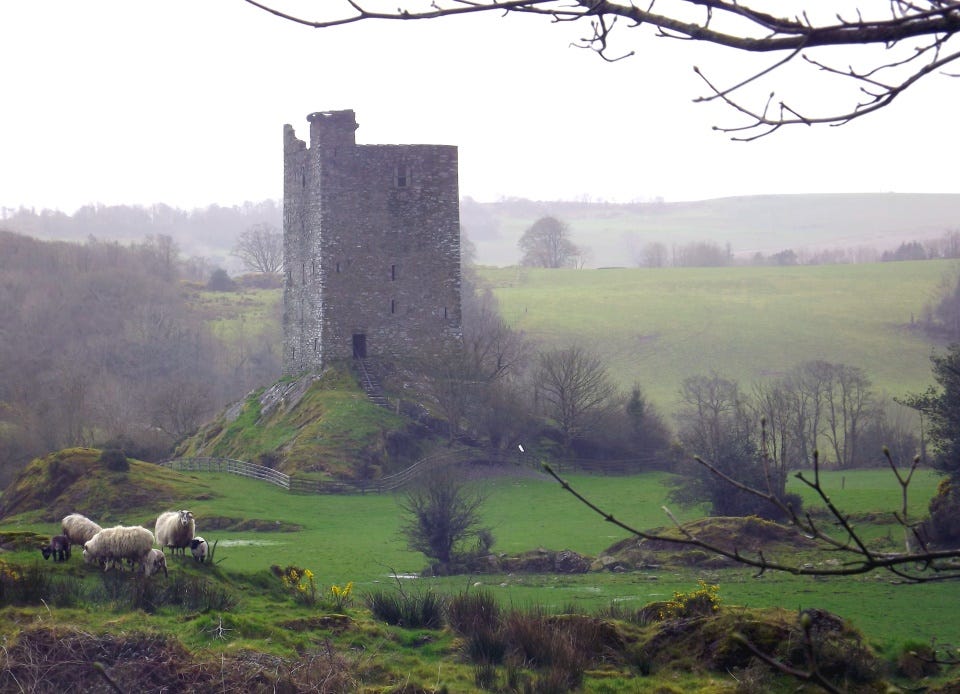
By late afternoon, Mary, we've reached our third evolutionary stage: a 15th-century tower house near Bunratty. Here, Irish and Norman traditions have merged into something more distinctly Hibernian. These tower houses represent what happened when local Irish lords adopted Norman building techniques but adapted them to Irish social structures and landscapes.
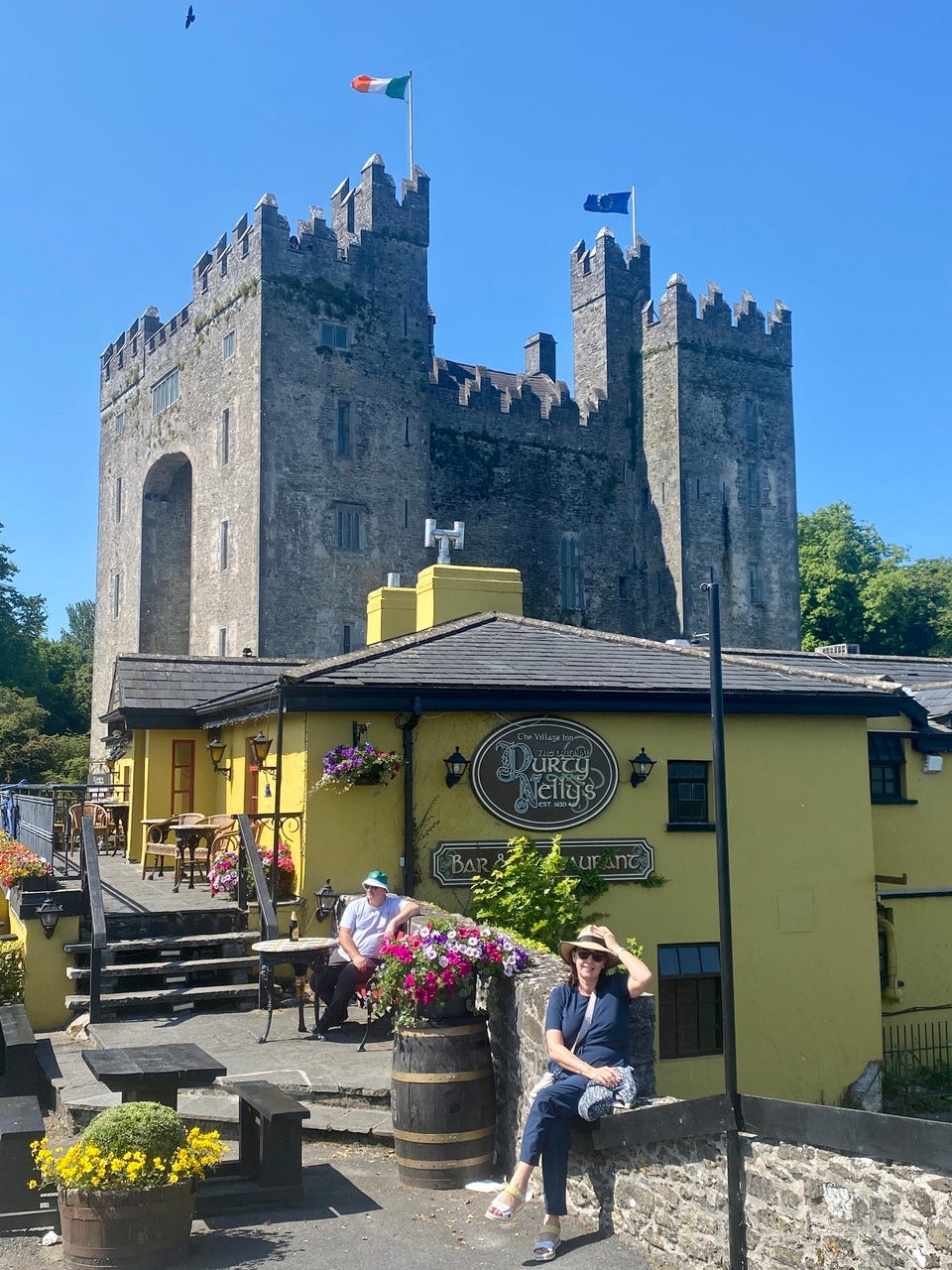
The tower house was perfect for Irish conditions. Easier to build than a massive castle, easier to defend than a manor house, but still impressive enough to display the owner's status.
Standing with me in the tower's upper chamber, you'd be struck by how these structures balanced competing needs – defence and comfort, display and practicality. The thick stone walls could withstand attack, but the large windows on the upper floors show that the builders expected periods of peace. The great hall speaks of hospitality and feasting, while the narrow doorways and hidden chambers reveal ongoing concerns about security.
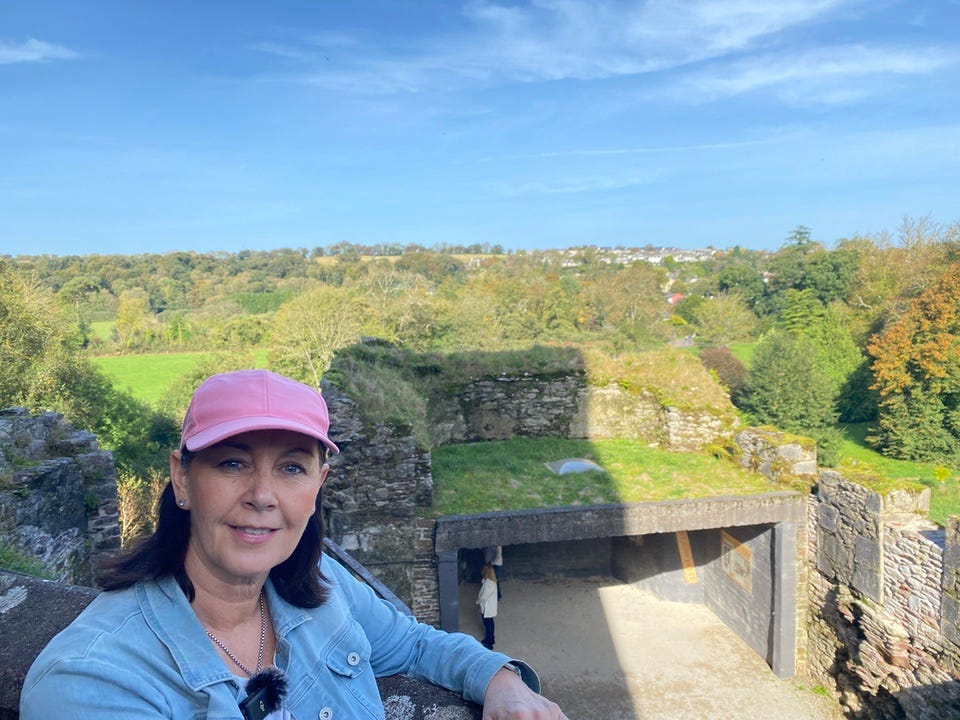
From the tower's top, the Irish countryside spreads below us like a patchwork quilt stitched together by stone walls. Somewhere in that landscape lie dozens of other tower houses, each representing a family's attempt to carve out security and prosperity in uncertain times.
Our Final Stop: Dromoland Castle - Romance and Revival
Our journey brings us full circle, Mary – not to genuine medieval architecture, but to the 19th-century Gothic Revival movement that reimagined castles as romantic symbols rather than military necessities. Here at Dromoland Castle, where we're spending the night, we encounter what the O'Brien family built in the early 1800s when it became fashionable to live in mock-medieval splendour.
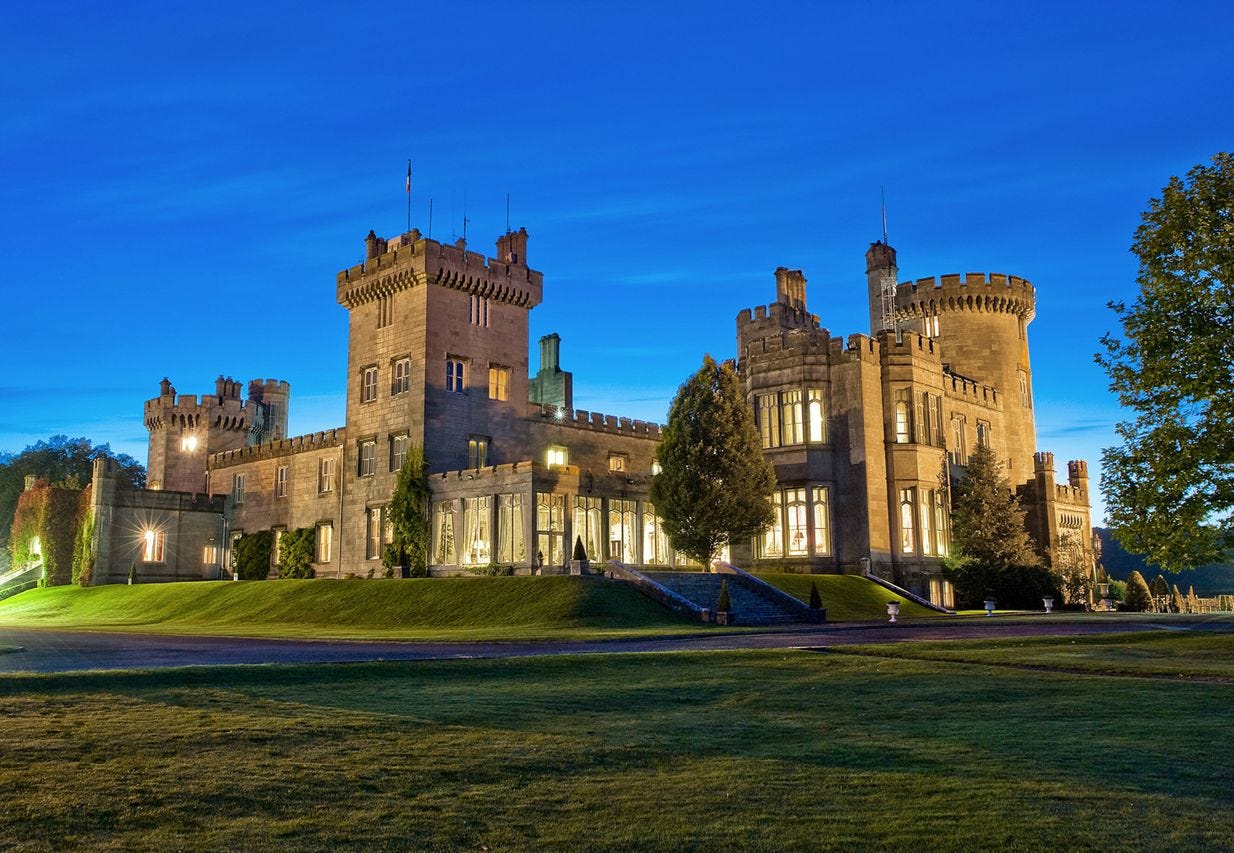
As we approach Dromoland's imposing facade, complete with crenellated towers and Gothic windows, I'm reminded of how each generation reinvents the past according to its own dreams and needs. The O'Briens, descendants of Brian Boru, were asserting their ancient nobility through architectural theatre – creating a stage set for aristocratic life rather than a genuine fortress.
This represents the final chapter in Irish castle evolution. Castles had become symbols rather than shelters, statements about heritage rather than responses to threat.
Standing in Dromoland's grand drawing room, with its soaring ceilings and elaborate plasterwork, think about the ring fort we visited this morning. Both structures represent responses to their times – one practical and immediate, the other symbolic and aspirational. Both speak to fundamental human needs for security, identity, and belonging.
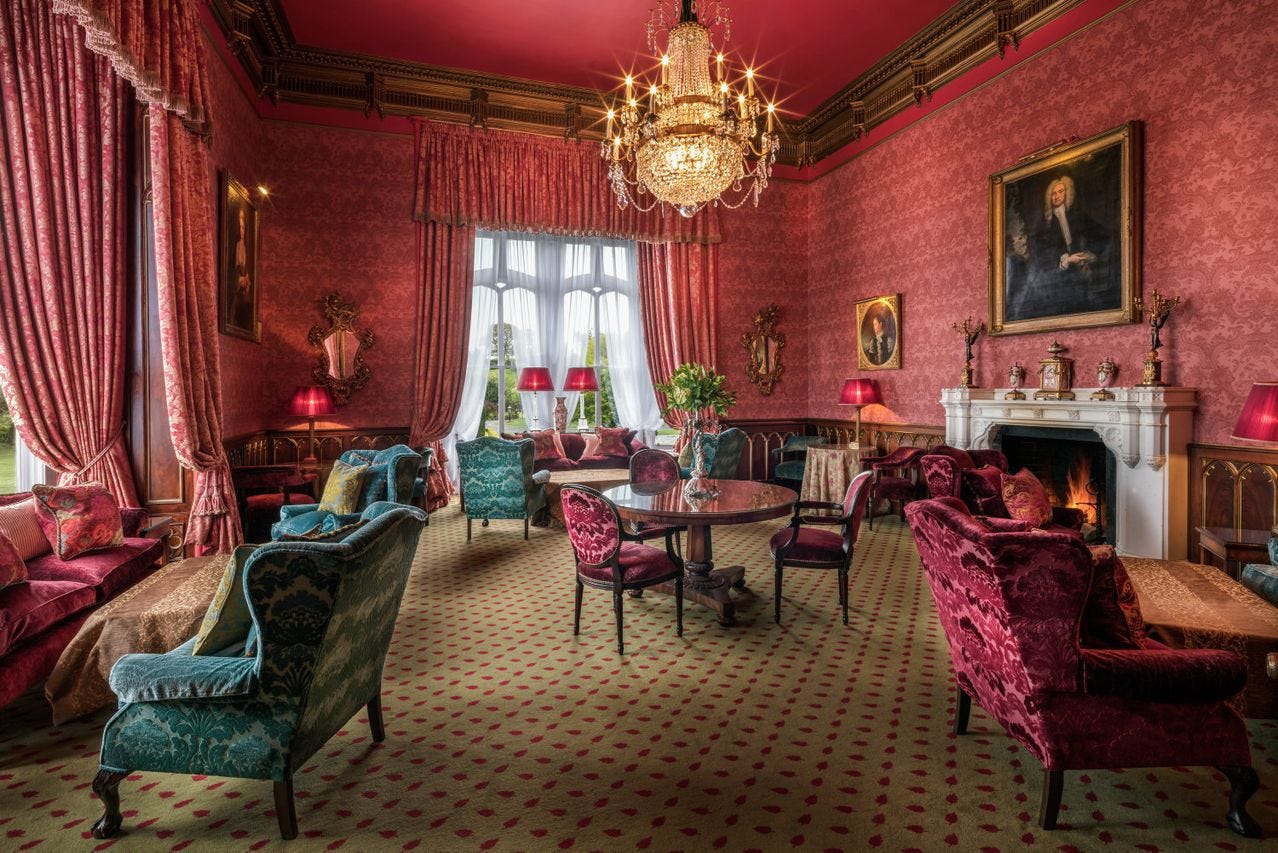
The Castle Hotel: Heritage as Hospitality
Today, Dromoland serves as a luxury hotel where guests can experience a sanitised version of castle life – all the grandeur without the discomfort, and all the romance without the reality of medieval hygiene! It represents yet another evolution in how we relate to these structures: heritage as commodity, history as experience, the past as a luxury product for contemporary consumption.
But there's something profound in this transformation too. By converting castles into hotels, we've found a way to keep these buildings alive, to ensure they remain part of the living landscape rather than mere museum pieces.
What This Journey Reveals
As evening settles over the Clare countryside, and Dromoland's lights begin to twinkle against the darkening sky, I hope you can see what this day's journey has revealed, Mary. Each defensive structure we've visited represents not just architectural evolution, but changing ideas about community, security, power, and home.
The ring fort stands for communal defence, of families and neighbours working together against common threats. The Norman castle represents systematic control, the use of architecture to impose political will across a landscape. The tower house shows adaptation and the creation of something new from foreign influences and local needs. The Gothic Revival castle reveals the power of myth and memory, the human need to connect with remembered and imagined ancestral stories. And the castle hotel demonstrates our contemporary hunger for authentic experiences, even when filtered through commercial hospitality.
But perhaps the deepest lesson lies in recognising that each of these structures served the same fundamental human needs – the desire for security, for belonging, for making a mark on the landscape that says "we were here, we mattered, we endured."
An Open Invitation
So Mary, the next time your plane descends into Shannon and you see those mysterious circles, know that you're seeing not ruins, but roots. Each one marks a beginning – a story of family, identity, and the enduring Irish instinct to build, belong, and remember. And if you ever decide to make that journey for real rather than just in imagination, you know where to find me – probably somewhere between a fairy fort and a castle hotel, feet in the muck and head in the clouds!
Until your next visit to Ireland,
Mike.